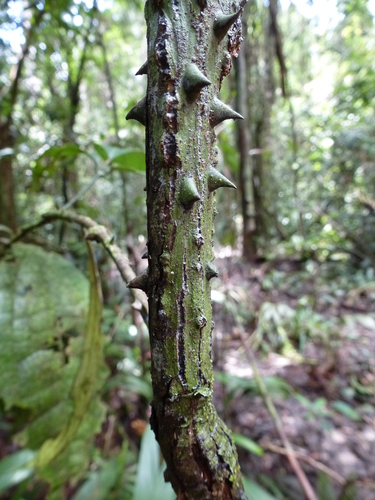
Strychnos mitis
S. Moore
Pitted-leaf monkey-orange
LoganiaceaeFruit
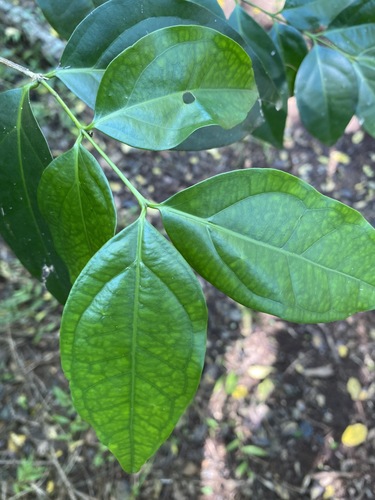
iNaturalist · cc-by-nc
(c) Linda Loffler, some rights reserved (CC BY-NC), uploaded by Linda Loffler
(c) Linda Loffler, some rights reserved (CC BY-NC), uploaded by Linda Loffler
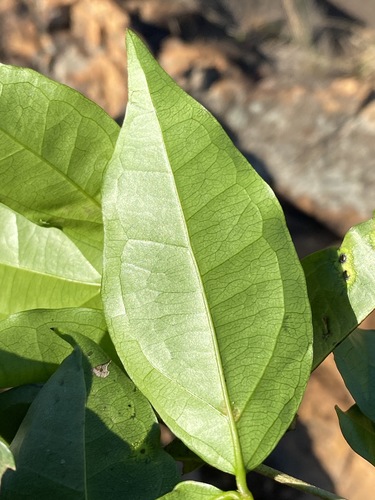
iNaturalist · cc-by-nc
(c) Linda Loffler, some rights reserved (CC BY-NC), uploaded by Linda Loffler
(c) Linda Loffler, some rights reserved (CC BY-NC), uploaded by Linda Loffler

iNaturalist · cc-by-nc
(c) Gail Bowers-Winters, some rights reserved (CC BY-NC), uploaded by Gail Bowers-Winters
(c) Gail Bowers-Winters, some rights reserved (CC BY-NC), uploaded by Gail Bowers-Winters
What to Eat
Edible parts: Fruit
The fruit is eaten.
Where to Find It
It is a tropical plant. It grows in the lowland.
Africa, East Africa, Ethiopia, Mozambique, Southern Africa, Tanzania, Zimbabwe,
Countries: Angola, Burkina Faso, Burundi, Benin, Botswana, Congo (DRC), Central African Republic, Congo (Republic), Cote d'Ivoire, Cameroon, Cape Verde, Djibouti, Algeria, Egypt, Eritrea, Ethiopia, Gabon, Ghana, Gambia, Guinea, Equatorial Guinea, Guinea-Bissau, Kenya, Comoros, Liberia, Lesotho, Libya, Morocco, Madagascar, Mali, Mauritania, Mauritius, Malawi, Mozambique, Namibia, Niger, Nigeria, Rwanda, Seychelles, Sudan, Sierra Leone, Senegal, Somalia, South Sudan, Sao Tome & Principe, Eswatini, Chad, Togo, Tunisia, Tanzania, Uganda, South Africa, Zambia, Zimbabwe
How to Identify
A tropical tree growing in lowland areas, belonging to the Loganiaceae family.
Names & Synonyms
Chatto, Manono, Mkwakwa, Mtonga, Mulqa
References (3)
- http://www.fao.org/forestry/25323-096344a3de335832e8f363c3ac5184a66.pdf
- Lulekal, E., et al, 2011, Wild edible plants in Ethiopia: a review on their potential to combat food insecurity. Afrika Focus - Vol. 24, No 2. pp 71-121
- Senbeta, F. et al, 2013, Diversity of Useful Plants in the Coffee Forests of Ethiopia. Ethnobotany Research & Applications 11:049-069