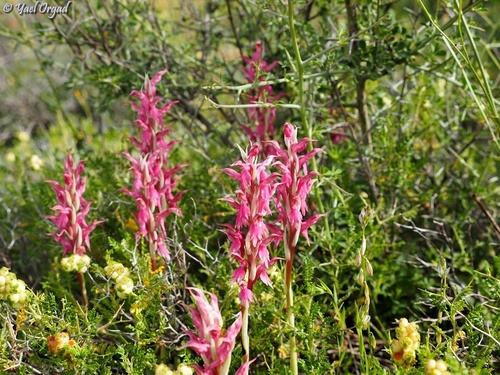
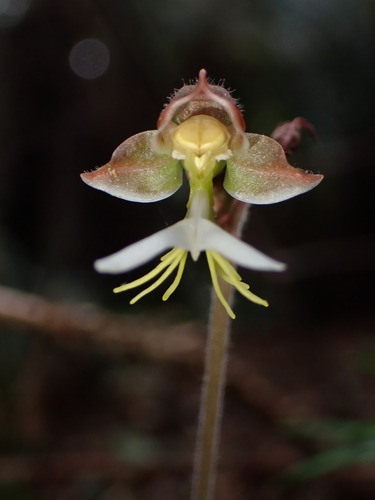
Brachycorythis pleistophylla
Rchb. f.
OrchidaceaeRoots

iNaturalist · cc-by-nc
(c) Charles Hopkins, some rights reserved (CC BY-NC), uploaded by Charles Hopkins
(c) Charles Hopkins, some rights reserved (CC BY-NC), uploaded by Charles Hopkins
iNaturalist · cc-by-nc
(c) bureaubenjamin, some rights reserved (CC BY-NC)
(c) bureaubenjamin, some rights reserved (CC BY-NC)
What to Eat
Edible parts: Root, Tuber
The roots and tubers are edible.
Where to Find It
It is a tropical plant.
Africa, East Africa, Madagascar, Mozambique, Tanzania,
Countries: Angola, Burkina Faso, Burundi, Benin, Botswana, Congo (DRC), Central African Republic, Congo (Republic), Cote d'Ivoire, Cameroon, Cape Verde, Djibouti, Algeria, Egypt, Eritrea, Ethiopia, Gabon, Ghana, Gambia, Guinea, Equatorial Guinea, Guinea-Bissau, Kenya, Comoros, Liberia, Lesotho, Libya, Morocco, Madagascar, Mali, Mauritania, Mauritius, Malawi, Mozambique, Namibia, Niger, Nigeria, Rwanda, Seychelles, Sudan, Sierra Leone, Senegal, Somalia, South Sudan, Sao Tome & Principe, Eswatini, Chad, Togo, Tunisia, Tanzania, Uganda, South Africa, Zambia, Zimbabwe
How to Identify
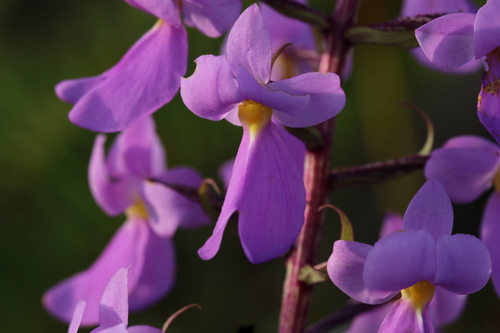
An ground orchid. It is a herb that grows 40-90 cm tall. It has fleshy, woolly cylinder shaped roots. There are several overlapping leaves. These are 10 cm long by 1.5 cm wide. They are sword shaped and taper to the tip. The flowering stalk is 12-25 cm long by 2-4 cm wide. It has many flowers in a dense arrangement. The flowers are red to purple.
Names & Synonyms
Ligosi
Brachycorythis briartiana Kraenzl.Brachycorythis macclouniei BraidBrachycorythis perrieri Schltr.Brachycorythis pulchra Schltr.Platanthera pleistophylla (Rchb.f.) Schltr.
References (2)
- Hamisy, W. C., 2007, Development of Conservation Strategies for the Wild Edible Orchid in Tanzania. National Plant Genetic Resources Centre. Arusha, Tanzania. p 12
- Mapunda, L. N. D., Edible Orchids in Makete district, the Southern Highlands of Tanzania: Swedish Biodiversity Centre. CBM Master's Thesis.