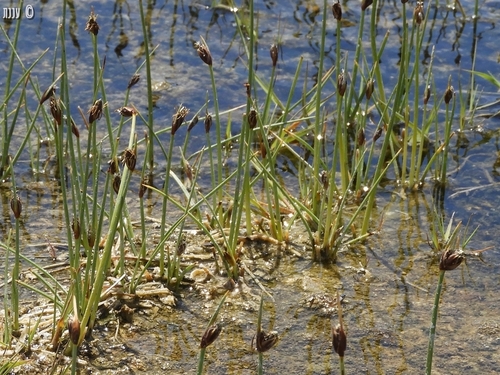
Bulbostylis hispidula
(Vahl) R. W. Haines

(c) Grant Reed, some rights reserved (CC BY-NC), uploaded by Grant Reed
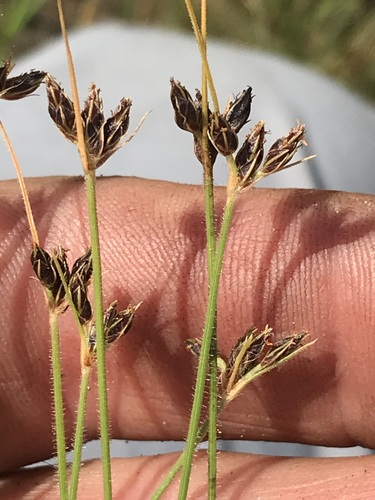
(c) David Hoare, some rights reserved (CC BY-NC-SA), uploaded by David Hoare
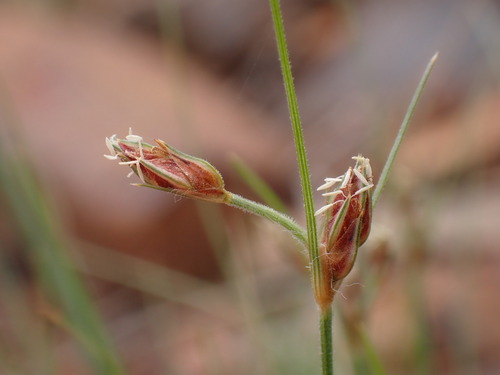
(c) David Hoare, some rights reserved (CC BY-NC-SA), uploaded by David Hoare
What to Eat
Edible parts: Seeds
The seeds are edible.
Where to Find It
It is a tropical plant. It can grow in wet grassland and woodland or in dry sandy places.
Africa, Angola, Armenia, Azerbaijan, Belize, Benin, Bolivia, Botswana, Brazil, Burkina Faso, Burundi, Cameroon, Caucasus, Central Africa, Central America, Chad, Colombia, Congo DR, Congo R, Costa Rica, Cuba, East Africa, El Salvador, Eswatini, Ethiopia, Europe, Gabon, Gambia, Georgia, Ghana, Guatemala, Guiana, Guianas, Guinea, Guinée, Guinea-Bissau, Guyana, Honduras, Indonesia, Kenya, Liberia, Madagascar, Mali, Mauritania, Mexico, Middle East, Mozambique, Namibia, Nicaragua, Niger, Nigeria, North America, Panama, Philippines, Puerto Rico, Sahel, SE Asia, Senegal, Seychelles, Socotra, Somalia, South Africa, South America*, Southern Africa, Suriname, Swaziland, Tanzania, Togo, Turkey, Türkiye, Uganda, Venezuela, West Africa, West Indies, Yemen, Zambia, Zimbabwe,
How to Identify
A sedge. It has small rough stiff hairs. It forms tufts and grows 10-80 cm tall. It can have creeping rhizomes. The leaves are 1-15 cm long by 0.2-0.5 mm wide. The flowering shoots can be simple or compound. There can be 2 to many spikelets. The nutlets are pale grey and 1-1.3 mm long by 1 mm wide. They have 3 sides.
Wikipedia
Source ↗Bulbostylis hispidula (Afrikaans: fynbiesie, "fine rush") is a plant native to South Africa, Eswatini, Botswana, and Namibia. The subspecies pyriformis can be found in all South African provinces except Western Cape. On the SANBI Red List, it is listed as "safe" (LC). The species has an almost pan-tropical range: Central and northern South America; western, central, northeastern, eastern, and southern Africa, and southern Madagascar. There are several subspecies with somewhat narrower rangers, but this is not completely certain. They grow everywhere from grasslands with a rainy season and deserts to dry grasslands and marshes along the coast. Bulbostylis hispidula is an annual or perennial plant with clumped seeds and a woody, fragrant root stock. The stem is 50–80 cm long and around 0.5-1.5 mm in diameter. The leaves are attached to the base of the stem. Sepals are light green and range from very hairy to almost bare. The leaves are 0.5 mm wide and less than 15 cm, often just 1–2 cm, long. The ovoid thorns are 4–15 mm long and 2–4 mm wide. The chromosomes are n=5.
Names & Synonyms
Chabaonda, Chisuku
References (1)
- Harris, F. M. A. and Salisu Mohammed, 2003, Relying on nature: Wild Foods in Northern Nigeria. AMBIO Vol. 32 No. 1, p 27 (As Fimbristylis hispidula)
More from Cyperaceae