Pseudocedrela kotschyi
(Schweinf.) Harms
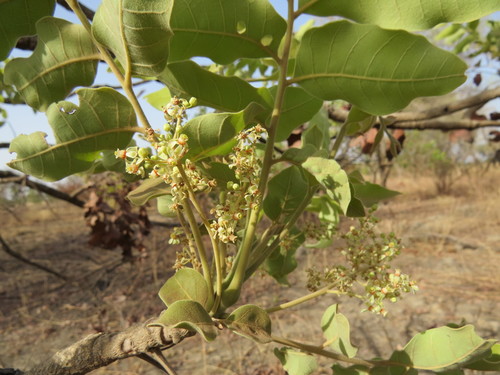
(c) ASSEDE Eméline S.P., some rights reserved (CC BY-NC), uploaded by ASSEDE Eméline S.P.
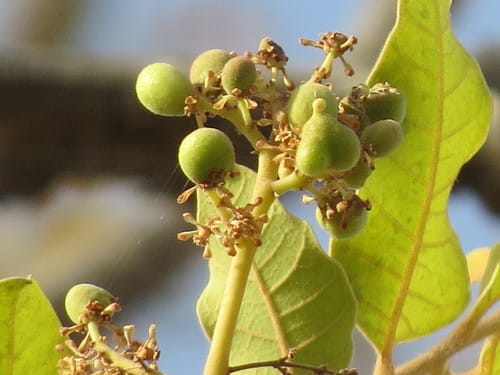
(c) ASSEDE Eméline S.P., some rights reserved (CC BY-NC)
What to Eat
Edible parts: Fruit ?
Known Hazards
Where to Find It
It is a tropical plant. It grows in the savannah zone.
Africa, Burkina Faso, East Africa, Ghana, Nigeria, Senegal, Togo, Uganda, West Africa,
How to Identify
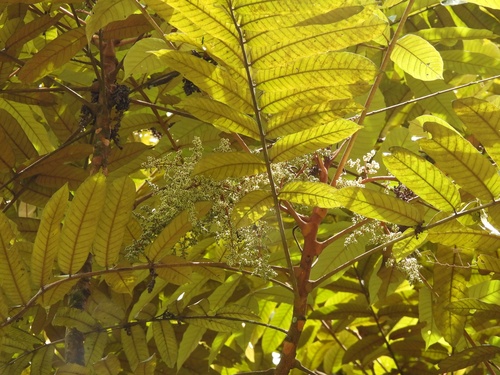
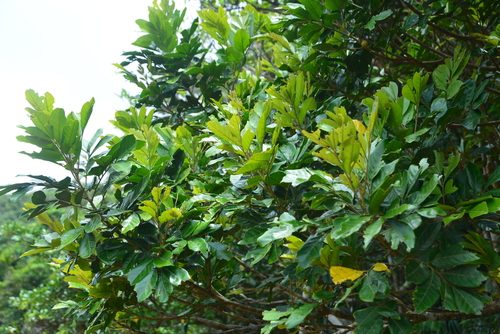
A tree. It grows 9-18 m high. The trunk is 2 m around. The crown is rounded. The bark is thick, silvery grey and cracked. The leaves are compound with leaflets along the stalk. The leaflets are opposite of alternate and there may or may not be a leaflet at the end. The leaflets are 11 cm long by 5 cm wide. They have a wavy edge. The flowers are white and have a scent. They are in groups 30 cm long in the axils of leaves. The fruit are erect and woody capsules. These are 10-12 cm long and have brown seeds.
How to Grow
Found in the wild on heavy and poorly drained soils. The tree can be managed by coppicing and pollarding. Trees are often subject to fire, but are very resistant and survive annual fire for over 50 years. It has been observed that there is often profuse regeneration in the rainy season, and it has been suggested that the fires of the dry season improve the germination of the seeds. On the other hand, it has also been reported that seed is destroyed by fire and that regeneration in localities that are subject to regular fire is limited to root suckers.
Propagation: Seed - they lose their viability rapidly, and should be sown soon after collection. Immersion in hot water and soaking for one night improve the germination results. Seedlings have a long taproot, making transplanting difficult. The seeds can be stored for up to 2 months in sealed containers in a cool place. They are easily attacked by insects and it is recommended that ash is added when they are stored. The plant develops root suckers, by which it can spread fairly well, resulting in clumps of trees.
Medicinal Uses
Used in traditional medicine.
Other Uses
The bark yields a brownish dye that has been used for dyeing cloth. Young stems and roots are commonly used as chewing sticks to keep the teeth healthy. A soluble gum is obtained from the tree. It resembles the gum obtained from Acacia seyal, but is of inferior quality. The heartwood is reddish brown and distinctly demarcated from the whitish to pale brown sapwood of varying width. The grain is interlocked, texture medium and even. The wood has an attractive figure, a faint smell and contains some gum. It is moderately heavy; saws and works well with hand and machine tools; planes smoothly, and nails, screws and glues satisfactorily. The wood is fairly durable, but is susceptible to attack by Lyctus and longhorn beetles and slightly liable to termite attack. The wood is valued for high-class joinery, furniture and cabinet making, and for construction. It resembles mahogany, but is heavier and harder. It is also used for doors, windows, frames, drums, barrels, canoes, mortars, bowls and gun-stocks. It is suitable for flooring, interior trim, ship building, vehicle bodies, toys, novelties, carvings, turnery, veneer and plywood. The wood is also used as firewood and for charcoal production. The leaves are used as a green manure. In Uganda, the tree is grown in pure stands or mixed with other trees such as mango and cashew nut.
Notes
It is used in medicine.
Names & Synonyms
Krubeta, Segodere, Siguédré
References (3)
- Batawila, K., et al, 2007, Diversite et gestion des legumes de cueillete au Togo. African Journal of Food, Agriculture, Nutrition and Development 7( 3& 4): 66
- Oteng-Amoako, A. A. (Ed.), 2006, 100 Tropical African Timber Trees from Ghana. Forestry Research Institute of Ghana. p 214
- World Checklist of Useful Plant Species 2020. Royal Botanic Gardens, Kew