Terminalia superba
Engl. & Diels
White afara tree
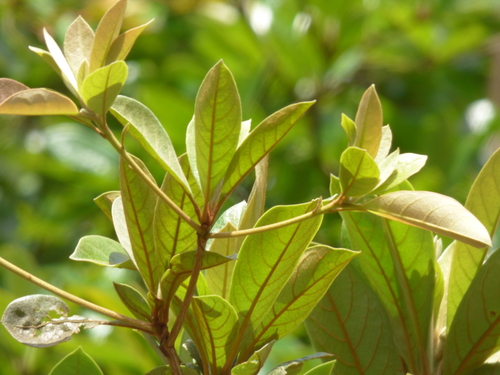
(c) May Bedoya, some rights reserved (CC BY-NC), uploaded by May Bedoya
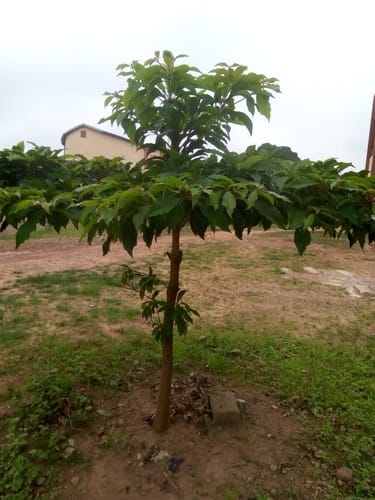
(c) didolanvijustin, some rights reserved (CC BY-NC)
What to Eat
Edible parts: Leaves
None known
Known Hazards
Where to Find It
It is a tropical plant. It grows in moist evergreen and semi-deciduous forests. It grows up to 1,000 m above sea level.
Africa, Angola, Argentina, Asia, Benin, Bolivia, Brazil, Burkina Faso, Cameroon, Central Africa, Central African Republic, CAR, Central America, Chile, Congo DR, Cote d'Ivoire, Ecuador, Equatorial Guinea, Fiji, French Guiana, Gabon, Ghana, Guatemala, Guinea, Guinée, Guyana, Honduras, Indonesia, Ivory Coast, Kenya, Malaysia, Mexico, Nicaragua, Niger, Nigeria, Pacific, Panama, Paraguay, Peru, Philippines, SE Asia, Sierra Leone, Solomon Islands, Suriname, Tanzania, Togo, Uganda, Uruguay, Venezuela, West Africa*, Zimbabwe,
How to Identify
A large tree. It grows 60 m tall. The trunk has buttresses at the base. The leaves are 10 cm long by 5 cm wide. The tree loses its leaves in the dry season. The flowers are produced just before the new leaves. The flowers are small and white. They are in loose spikes 10-12 cm long. The fruit has 2 wings.
How to Grow
A plant of the moist, tropical lowlands, where it is found at elevations from 150 - 1,000 metres. It grows best in areas where the mean maximum and minimum annual temperatures are within the range 22 - 30°c, though it can tolerate 18 - 36°c. It prefers a mean annual rainfall in the range 1,200 - 1,800mm, though can tolerate from 1,000 - 2,000mm.It is mainly found in areas with a dry season of around 4 months, but it does not respond well to long dry spells, especially when growing on sandy soils. Requires a sunny position - young trees grow straight and vigorously in full light, particularly if their crown is free, but they stagnate under shade. Grows best on rich, well-drained alluvial soils, but is also found on other types such as lateritic sands, gravel and clays, lava, black basaltic clays and crystalline soils. The tree will withstand occasional flooding. Prefers a pH in the range 6.5 - 7.5, tolerating 6 - 8.5. A fast-growing tree. Annual growth rates of 2.5 metres in height have been reported for the first 10 years after planting, whilst 4 year old trees in in Ghana have reached a height of 14 metres with boles 22cm in diameter. Under good conditions, planted trees may reach a bole diameter of 50cm in 20 years. The average annual increment in heartwood volume in plantations has been estimated at 14.5 cubic meters per hectare. The tree reaches sexual maturity late and at variable ages, for example at the age of 15 years in Cote d'Ivoire and 23 years in Congo. In the oldest stands in Congo, which are now 30 years old, a spacing of 12 x 12 metres appears to be appropriate, and trees are straight and vigorous. Natural pruning is excellent and starts early, at 3 - 4 years, and from then onwards the degree of self-pruning has a strong effect on the health and future value of the tree. It coppices readily from tree stumps, bears copious amounts of seed every year, and under plantation conditions achieves sexual maturity after 6 - 10 years. The rotation period as applied in favourable locations in Africa is 40 years. The root system is frequently fairly shallow, and as the tree ages the taproot disappears. The tree is frequently struck by lightning, presumably because of its dominant position in the forest. It is very fire sensitive.
Propagation: Seed requires no pre-treatment and should ideally be sown fresh, covered with fine soil and watered morning and evening; germination occurs in 2–4 weeks with temporary shading required. The root develops as a clear taproot. In the nursery, seedlings are lightly shaded for the first two months, then transplanted into nursery beds at 6–7 weeks when 5–8cm tall, spaced 20cm × 50cm apart — care must be taken to avoid taproot damage. Seedlings typically remain in the nursery for at least one year until they reach around 2 metres. Inoculation with endomycorrhizae can enhance seedling growth by about 25% after 10 weeks. Direct sowing is rarely done and not very effective. Seeds store well in sealed containers with a little desiccant at 2–4°C, giving 40–60% germination after 1–2 years; poor storage conditions reduce this to around 30% after one year. Grafting presents no difficulty and has been practised in Congo since 1970, with the optimum period found to be mid-August to mid-September before the rise of sap and the return of rains, using scions grafted immediately or transported under refrigeration.
Medicinal Uses
The bark is anodyne, astringent, and expectorant. Decoctions and macerations are used in traditional medicine for wounds, sores, haemorrhoids, diarrhoea, dysentery, malaria, vomiting, gingivitis, bronchitis, aphthae, swellings, and ovarian troubles. The bark contains gallic acid and methyl gallate, which have shown significant glycosidase inhibition activity. A methanol extract of the stem bark has demonstrated vasorelaxant and antidiabetic activities. Ethanol extracts of the roots and stems have shown distinct trypanocidal activity against both drug-sensitive and multi-drug-resistant strains of Trypanosoma congolense and Trypanosoma brucei. The leaves are diuretic, and the roots are laxative.
Other Uses
Terminalia superba is a pioneer species that regenerates well after forest exploitation, with seedlings commonly found along roadsides and in medium-sized forest gaps. Because seedlings tolerate full sun, the tree is useful in early-stage reforestation, and it is occasionally planted as shade in banana, cocoa, and coffee plantations. A yellow dye is obtained from the bark; reddish-brown and black dyes can also be produced using iron-rich mud or iron salts as a mordant, suitable for dyeing wraps, matting, and basket fibres. Three commercial timber types are recognised: white or straw-coloured; black, olive-grey to blackish-brown; and multicoloured with dark and light streaks. The heartwood is not clearly demarcated from the 12–15cm wide sapwood band. On exposure to air, the wood darkens slightly to resemble light oak. It is light to medium weight, soft to moderately hard, somewhat weak, and not durable — susceptible to pin-hole borers, powder-post beetles, longhorn beetles, termites, and marine borers. It air-dries rapidly with little degrade and moderate shrinkage; once dry it is stable in service. The wood is easy to work with hand and machine tools with slight blunting of cutting edges; it finishes well with a filler, holds nails and screws well with some splitting tendency, glues satisfactorily, and accepts paint and varnish well. It can be made into good-quality veneer by slicing or rotary peeling, though steam-bending properties are poor. Commercial applications include interior joinery, door posts and panels, mouldings, furniture, office fittings, crates, matches, veneer, and plywood. It is also suitable for light construction, light flooring, shipbuilding, interior trim, vehicle bodies, sporting goods, toys, novelties, musical instruments, food containers, vats, turnery, hardboard, particle board, and pulpwood. Local uses include temporary house construction, planks, roof shingles, canoes, paddles, coffins, boxes, and domestic utensils. The wood is suitable for paper making, capable of producing a relatively wide range of pulps, though the resulting paper is of moderate quality. It is also used as fuel and for making charcoal.
Wikipedia
Source ↗Terminalia superba, the superb terminalia, limba, afara (UK), korina (US), frake (Africa), African limba wood, or ofram (Ghana), is a large tree in the family Combretaceae, native to tropical western Africa. It grows up to 60 m tall, with a domed or flat crown, and a trunk typically clear of branches for much of its height, buttressed at the base. The leaves are 10 cm long and 5 cm broad, and are deciduous in the dry season (November to February). The flowers are produced at the end of the dry season just before the new leaves; they are small and whitish, growing in loose spikes 10–12 cm long. The fruit is a samara with two wings.
Other Information
The leaves are only occasionally eaten.
Names & Synonyms
Afara, Frake, Korina, Limba, Ofram, Pohon ketapang afara
References (7)
- Achigan-Dako, E, et al (Eds), 2009, Catalogue of Traditional Vegetables in Benin. International Foundation for Science.
- Dansi, A., et al, 2008, Traditional leafy vegetables and their use in the Benin Republic. Genet Resour Crop Evol (2008) 55:1239–1256
- Dansi, A., et al, 2009, Traditional leafy vegetables in Benin: folk nomenclature, species under threat and domestication. Acta Bot. Gallica 156(2), 183-199
- Latham, P., 2004, Useful Plants of Bas-Congo province. Salvation Army & DFID p 277
- Orwa C, A Mutua, Kindt R , Jamnadass R, S Anthony. 2009 Agroforestree Database
- Oteng-Amoako, A. A. (Ed.), 2006, 100 Tropical African Timber Trees from Ghana. Forestry Research Institute of Ghana. p 240
- Sukarya, D. G., (Ed.) 2013, 3,500 Plant Species of the Botanic Gardens of Indonesia. LIPI p 549


