Combretum sericeum
G. Don

iNaturalist · cc-by-nc-sa
(c) Marco Schmidt, some rights reserved (CC BY-NC-SA), uploaded by Marco Schmidt
(c) Marco Schmidt, some rights reserved (CC BY-NC-SA), uploaded by Marco Schmidt
iNaturalist · cc-by-nc
(c) thierry_aebischer_chinko, some rights reserved (CC BY-NC)
(c) thierry_aebischer_chinko, some rights reserved (CC BY-NC)
What to Eat
Edible parts: Medicine
Where to Find It
It is a tropical plant. It grows in savannah.
Africa, Benin, Burkina Faso, Ghana, Guinea, Guinée, Niger, Nigeria, Sahel, Sudan, West Africa,
Countries: Angola, Burkina Faso, Burundi, Benin, Botswana, Congo (DRC), Central African Republic, Congo (Republic), Cote d'Ivoire, Cameroon, Cape Verde, Djibouti, Algeria, Egypt, Eritrea, Ethiopia, Gabon, Ghana, Gambia, Guinea, Equatorial Guinea, Guinea-Bissau, Kenya, Comoros, Liberia, Lesotho, Libya, Morocco, Madagascar, Mali, Mauritania, Mauritius, Malawi, Mozambique, Namibia, Niger, Nigeria, Rwanda, Seychelles, Sudan, Sierra Leone, Senegal, Somalia, South Sudan, Sao Tome & Principe, Eswatini, Chad, Togo, Tunisia, Tanzania, Uganda, South Africa, Zambia, Zimbabwe
How to Identify
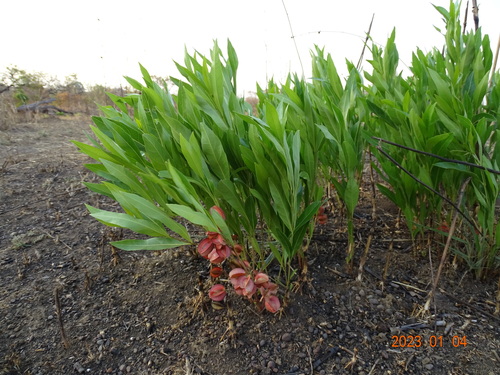
A shrub. It has erect shoots 1 m tall. These come from a woody rootstock. The flower petals can be yellow, pink or red. The fruit is pink and turns pale brown.
Medicinal Uses
The gum is used as medicine, and the roots are used to treat diarrhoea.
Notes
The gum is used as medicine. The roots are used to treat diarrhoea.
Names & Synonyms
Combretum herbaceum G. DonCombretum simulans Porteres
References (2)
- Achigan-Dako, E, et al (Eds), 2009, Catalogue of Traditional Vegetables in Benin. International Foundation for Science.
- World Checklist of Useful Plant Species 2020. Royal Botanic Gardens, Kew


