Oldenlandia diffusa
(Willd.) Roxb.
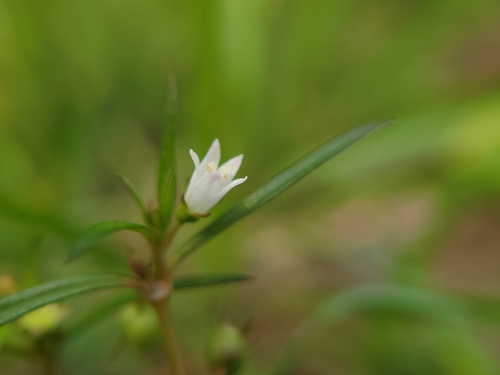
(c) 曾昱承 Yu-Cheng Zeng, some rights reserved (CC BY-NC)
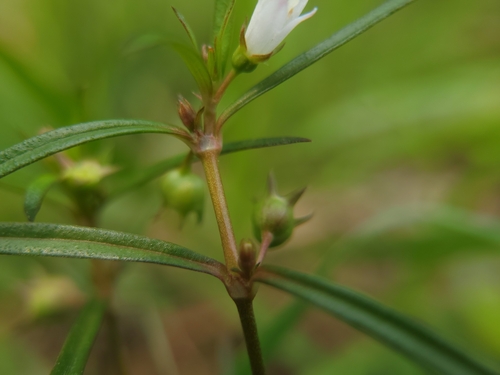
(c) 曾昱承 Yu-Cheng Zeng, some rights reserved (CC BY-NC)
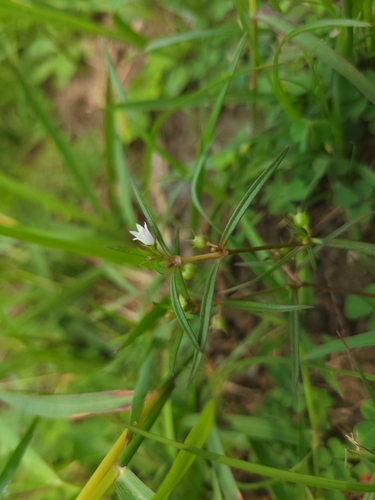
(c) 曾昱承 Yu-Cheng Zeng, some rights reserved (CC BY-NC)
What to Eat
Edible parts: Leaves, Fruit
None known
Where to Find It
It is a subtropical plant. It grows in wetlands.
Asia, India, Indochina, Korea, Laos, Myanmar, Northeastern India, SE Asia,
How to Identify
A herb that lies along the ground. The leaves are small and opposite. They are 2-3 cm long and 2-3 mm wide. The flowers are small and occur singly. They are white and have short stalks. The fruit is almost round.
How to Grow
Propagation: Sow seed in spring in situ.
Medicinal Uses
Snake-needle grass is a pleasant-tasting, cooling, alterative herb that lowers fever, reduces inflammation, relieves pain, and has diuretic and antibacterial properties. It acts mainly on the liver and stimulates the immune system. The whole plant is alterative, anodyne, antibacterial, anti-inflammatory, antitumor, cardiotonic, depurative, diuretic, febrifuge, and sedative. The plant is harvested in summer and dried for later use. Taken internally, it is used to treat fevers, coughs, asthma, jaundice, impure blood, urinary tract infections, acute appendicitis, biliousness, and cancers of the digestive tract. Externally, it is applied to snake bites, boils, abscesses, and severe bruising.
Other Uses
None known
Wikipedia
Source ↗A small annual herb reaching 0.3 m tall with a similar spread. Hardy to UK zone 8. Flowers appear from August to September. The plant is hermaphroditic and tolerates light sandy, medium loamy, and heavy clay soils across mildly acid to basic pH ranges. It grows in semi-shade with preference for moist conditions.
Names & Synonyms
Bonjaluk, Daosriateng, Deusri atheng, Ganga-lar, Pitpapra, Sula-nahpa
References (7)
- Baro, D., Baruah, S. and Borthukar, S. K. 2015, Documentation on wild vegetables of Baksa district, BTAD (Assam). Scholars Research Library. Archives of Applied Science Research, 2015, 7 (9):19-2 (As Hedyotis diffusa)
- Dutta, U., 2012, Wild Vegetables collected by the local communities from the Churang reserve of BTD, Assam. International Journal of Science and Advanced Technology. Vol. 2(4) p 121
- Kumar, R. & Saikia, P., 2020, Wild edible plants of Jharkhand and their utilitarian perspectives. Indian Journal of Traditional Knowledge Vol 19 (2), April 2020, pp 237-250
- Narzary, H., et al, 2013, Wild Edible Vegetables Consumed by Bodo tribe of Kokrajhar District (Assam), North-East India. Archives of Applied Science Research, 5(5): 182-190 (As Hedyotis diffusa)
- Pagag, K. & Borthakur, S.K., 2012, Wild edible wetland plants from Lakhimpur district of Assam, India. Pleione 6(2): 322 - 327 (As Hedyotis diffusa)
- Patiri, B. & Borah, A., 2007, Wild Edible Plants of Assam. Geethaki Publishers. p 68
- Pegu, R., et al, 2013, Ethnobotanical study of Wild Edible Plants in Poba Reserved Forest, Assam, India. Research Journal of Agriculture and Forestry Sciences 1(3):1-10 (As Hedyotis diffusa)


