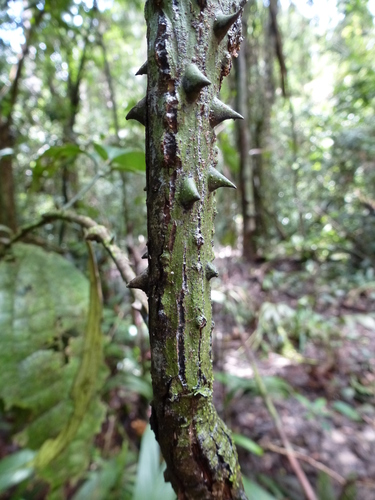
Strychnos erichsonii
M. R. Schomb. ex Progel
Big devildoer

Botanical Research Institute of Texas

Botanical Research Institute of Texas
What to Eat
Edible parts: Fruit
The pulp of the fruit is sweet and edible.
Known Hazards
Where to Find It
It is a tropical plant. It often grows near riverbanks.
America, Colombia, Guiana, Guianas, Guyana, South America, Suriname, Venezuela,
How to Identify
A woody climber. The leaves are opposite and leathery. It has curled woody tendrils. The flowers are in groups in the axils of leaves. The fruit is round and orange and 3 cm across.
Medicinal Uses
The bark is often used as an aphrodisiac in the Amazon, sometimes macerated in tafia rum. The root-bark is used as a powerful aphrodisiac. The plant contains numerous alkaloids, including diaboline, henningsanine, condensamine and erichsoniine. Erichsoniine seems to be neither toxic nor biologically active. The total alkaloid mix of the plant has a convulsant, strychnine-like action; hence its use as an aphrodisiac.
Names & Synonyms
Kwabanaro, Aritya wokuru
References (2)
- Andel T. van, 2000, Useful plants of Guyana. Non-timber forest products of the North-West District of Guyana. Part 2. A Field Guide. Tropenbos-Guyana Programme. p 284
- Roa, J. A. G. & Boada, D. S. G., 2018, Fundación para el Fortalecimiento de la Fruticultura y Plantas Alimenticias no Convencionales en Colombia.