Etlingera loroglossa
(Gagnep.) R. M. Sm.

Paris, Museum National d'Histoire Naturelle, EL
What to Eat
Edible parts: Rhizome, Root
The rhizome is eaten fresh or chewed with betel nut as a masticatory. Small pieces are added to curries for flavour.
Where to Find It
It is a tropical plant.
Asia, India, Northeastern India*,
How to Identify
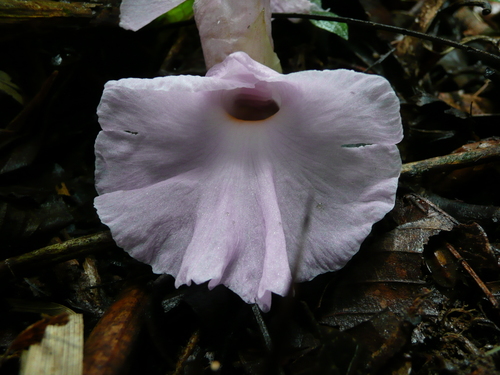
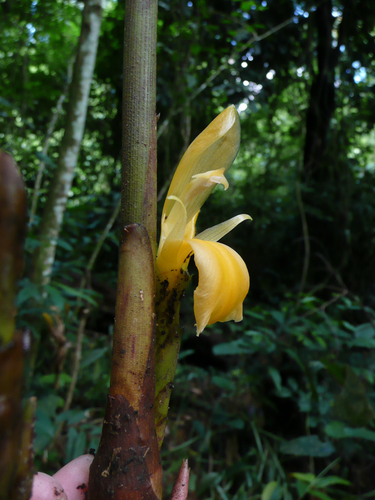
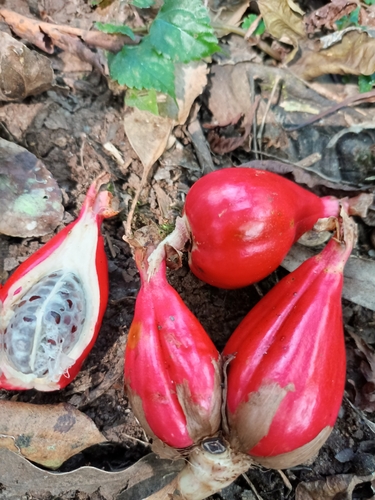
A ginger family herb. It keeps growing from year to year. It has a creeping rootstock. It has an aerial stem and is leafy. The leaves are large and in two rows. The flowers are yellow. They develop from the root stock. The fruit is a capsule. It turns black when ripe.
Wikipedia
Source ↗Etlingera loroglossa is a monocotyledonous plant species that was first described by François Gagnepain, and was given its current name by Rosemary Margaret Smith. Etlingera loroglossa is part of the genus Etlingera and the family Zingiberaceae. The range of the species is Assam in India. No subspecies are listed in the Catalog of Life.
Names & Synonyms
Gandh tora, Karphul
References (2)
- Patiri, B. & Borah, A., 2007, Wild Edible Plants of Assam. Geethaki Publishers. p 140
- Phangchopi, U., et al, 2015, Diversity of wild edible plants in Marat Longri Wildlife Sanctuary, Assam. Indian Journal of Natural Products and Resources Vol. 6(4), December 2015 pp. 305-313