Alangium ridleyi
King
Lowland alangium tree
CornaceaeFruit

iNaturalist · cc-by
(c) Adam Kamal, some rights reserved (CC BY), uploaded by Adam Kamal
(c) Adam Kamal, some rights reserved (CC BY), uploaded by Adam Kamal
iNaturalist · cc-by
(c) Adam Kamal, some rights reserved (CC BY)
(c) Adam Kamal, some rights reserved (CC BY)
What to Eat
Edible parts: Fruit, Aril
The fruit and the white aril (layer around the seeds) are edible.
Where to Find It
It is a tropical plant. It grows in mixed forest. It grows from sea level to about 350 m above sea level.
Asia, Indochina, Indonesia, Laos, Malaysia, SE Asia, Singapore, Thailand, Vietnam,
Countries: United Arab Emirates, Afghanistan, Armenia, Azerbaijan, Bangladesh, Bahrain, Brunei, Bhutan, China, Georgia, Indonesia, Israel, India, Iraq, Iran, Jordan, Japan, Kyrgyzstan, Cambodia, North Korea, South Korea, Kuwait, Kazakhstan, Laos, Lebanon, Sri Lanka, Myanmar, Mongolia, Maldives, Malaysia, Nepal, Oman, Philippines, Pakistan, Qatar, Saudi Arabia, Singapore, Syria, Thailand, Tajikistan, Timor-Leste, Turkmenistan, Turkey, Taiwan, Uzbekistan, Vietnam, Yemen
How to Identify
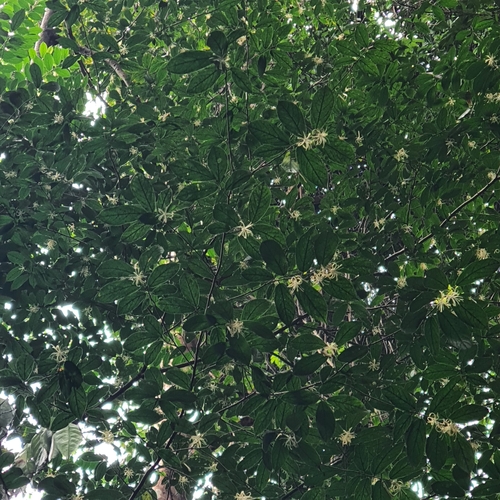
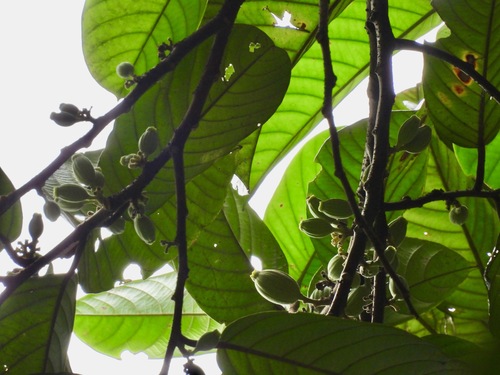
A tree. It grows about 30 m tall. The trunk can be 70 cm across. The leaves are alternate and simple. The flowers are about 3 cm across. They are white and in small groups in the axils of leaves. The petals are long and narrow and curve downwards. The fruit are about 2.5 cm long. They are red to purple and fleshy. The white layer around the seeds is edible.
How to Grow
Plants can be grown by seeds.
Names & Synonyms
Lajik kuning, Medong, Pohon alangi medang
Marlea costata Valeton [Illegitimate]
References (3)
- Chinh, N. N., et al, 1996, Vietnam Forest Trees. Agricultural Publishing House. Hanoi. p 31
- Kebler, P. J. A., & Kidiyasa, 1994, Trees of the Balikpapan-Samarinda area of East Kalimantan, Indonesia. The Tropenbos Foundation, Wageningen, The Netherlands. p
- Slik, F., www.asianplant.net