Calophyllum macrocarpum
Hook. f.
Nicobar canoe tree
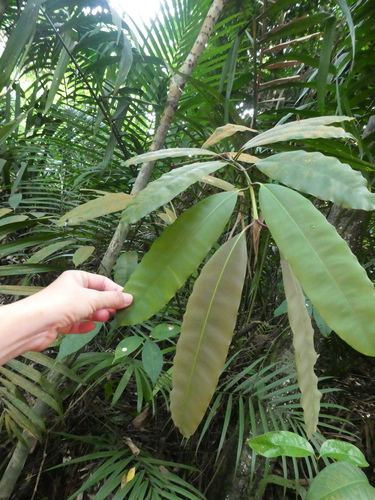
(c) usebcm, some rights reserved (CC BY-NC), uploaded by usebcm
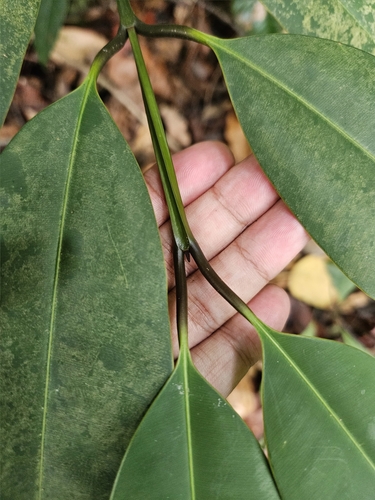
(c) kaigrr, some rights reserved (CC BY-NC)
What to Eat
Edible parts: Fruit
At least the outer layer of the fruit appears to be edible with reports that 'the orange sap at cambium pericarp of the fruit may be eaten' and 'the fruit is green and edible with a sweet and somewhat fibrous flesh'. The ellipsoid fruit is up to 12.7cm x 6cm.
Where to Find It
It is a tropical plant. It grows on alluvial soils and along rivers. It grows in seasonal swamp forest. It grows up to 800 m above sea level.
Asia, Brunei, Indochina, Indonesia, Malaysia, SE Asia, Singapore, Thailand,
How to Identify
A tree. It can grows 30- 60 m high. The trunk is 75 cm across. It can have small buttresses. The stems have white to yellow latex. The leaves are opposite and simple. They are narrowly oval to sword shaped. The flowers are 25 mm across. They are white. The fruit are 7-14 cm long and green and fleshy.
How to Grow
It can be grown from seeds.
Other Uses
The sapwood is light brown; the heartwood dark brown. The wood is hard. It is used to build houses and make furniture.


