Amomum muricarpum
Elmer
ZingiberaceaeRoots
iNaturalist · cc-by-nc
(c) José Ignacio Márquez Corro, some rights reserved (CC BY-NC)
(c) José Ignacio Márquez Corro, some rights reserved (CC BY-NC)
iNaturalist · cc-by-nc
(c) José Ignacio Márquez Corro, some rights reserved (CC BY-NC)
(c) José Ignacio Márquez Corro, some rights reserved (CC BY-NC)
iNaturalist · cc-by-nc
(c) José Ignacio Márquez Corro, some rights reserved (CC BY-NC)
(c) José Ignacio Márquez Corro, some rights reserved (CC BY-NC)
What to Eat
Edible parts: Rhizome, Root
The rhizome is eaten raw or boiled.
Where to Find It
It is a tropical plant. It grows in dense forests between 300-1,000 m above sea level in southern China.
Asia, China, Laos, Philippines, SE Asia, Vietnam,
Countries: United Arab Emirates, Afghanistan, Armenia, Azerbaijan, Bangladesh, Bahrain, Brunei, Bhutan, China, Georgia, Indonesia, Israel, India, Iraq, Iran, Jordan, Japan, Kyrgyzstan, Cambodia, North Korea, South Korea, Kuwait, Kazakhstan, Laos, Lebanon, Sri Lanka, Myanmar, Mongolia, Maldives, Malaysia, Nepal, Oman, Philippines, Pakistan, Qatar, Saudi Arabia, Singapore, Syria, Thailand, Tajikistan, Timor-Leste, Turkmenistan, Turkey, Taiwan, Uzbekistan, Vietnam, Yemen
How to Identify
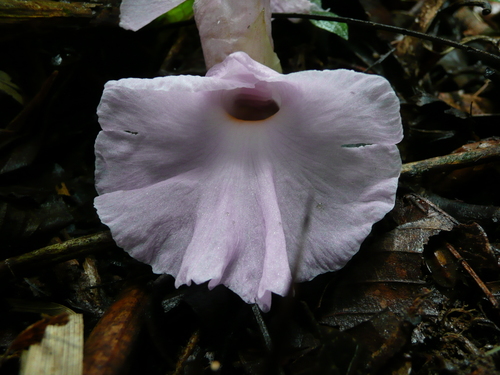
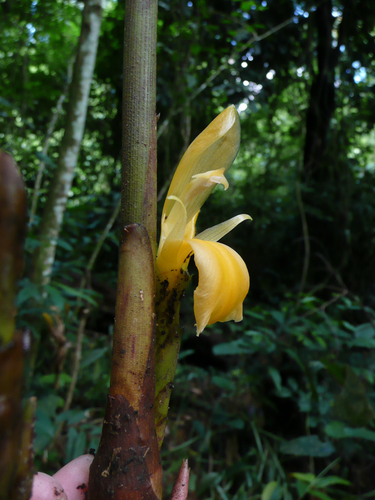
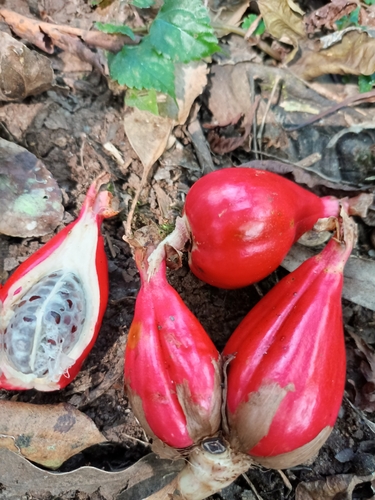
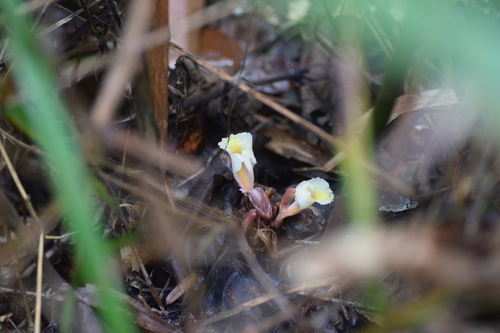
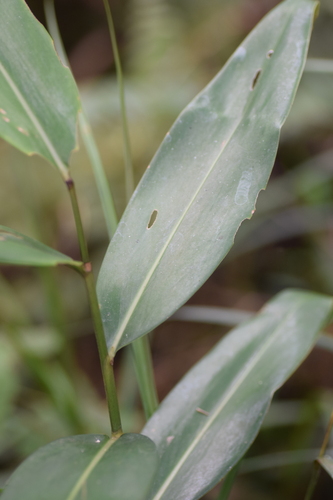
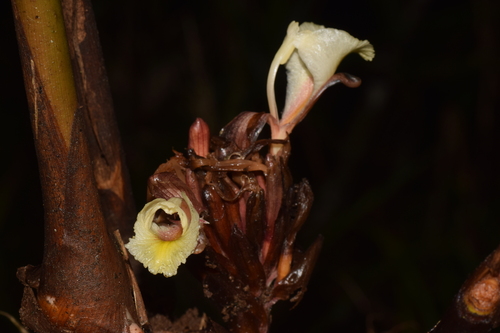
A ginger family herb. It grows about 1-2 tall. It has a robust rhizome. The leaf is sword shaped. It is 25-35 cm long by 6-8 cm wide. The flower is a spike. It is oval and 6-8 cm long. The flowers are yellow with purple spots.
Names & Synonyms
Tarosi
Hornstedtia muricarpa (Elmer) Elmer
References (1)
- Menisa, A. A., et al, 2012, Survey and characterization of Indigenous Food Plants in Ilocos Norte, Philippines. SEARCA Discussion Paper series No. 2011-2