Scolopia stolzii
Gilg
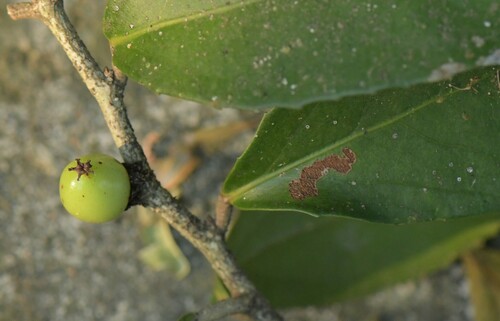
(c) isaklombard, some rights reserved (CC BY-NC)
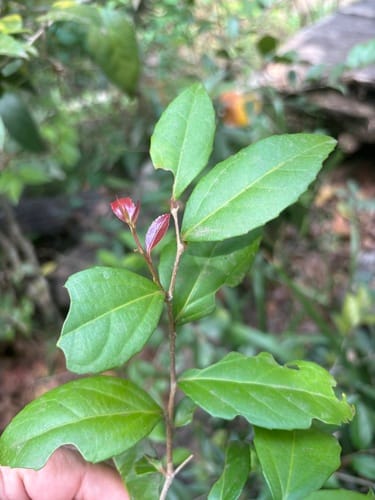
(c) Troos van der Merwe, some rights reserved (CC BY-NC)
What to Eat
Edible parts: Fruit
The fruits are eaten.
Where to Find It
It is a tropical plant. It grows along rivers and in dry lowland and mountain forests. It grows in the lowlands and highlands. It has been recorded at 1,600 m above sea level in Tanzania.
Africa, Cameroon, Central Africa, Congo, East Africa, Malawi, Mozambique, Tanzania, Zambia, Zimbabwe,
How to Identify
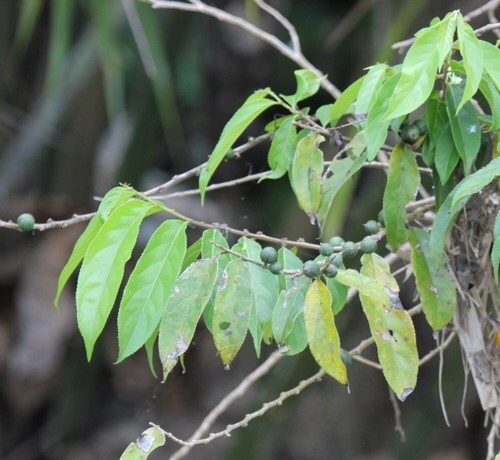
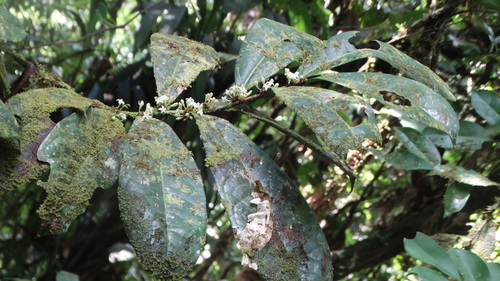
A small tree. It grows 10 m tall. The bark is pale brown and smooth and flaking. The leaves are simple and alternate. The leaf blade is 5-7 cm long by 3-6 cm wide. They are oval and rounded or wedge shaped at the base. They taper to the tip and can have teeth along the edge. The flowers occur singly without stalks in the upper axils of leaves. The fruit is a flattened, fleshy berry. It is red. They are 2-3 cm wide.
Notes
Also put in the Flacourtiaceae family.
Names & Synonyms
Comangamba, Mgola, Mgovigovi, Mzuyuyu
References (4)
- http://www.fao.org/forestry/25323-096344a3de335832e8f363c3ac5184a66.pdf (As Scolopia riparia)
- Lovett, J. C. et al, Field Guide to the Moist Forest Trees of Tanzania. p 64
- Ruffo, C. K., Birnie, A. & Tengnas, B., 2002, Edible Wild Plants of Tanzania. RELMA p 596
- World Checklist of Useful Plant Species 2020. Royal Botanic Gardens, Kew