Scolopia theifolia
Gilg
SalicaceaeFruit

gbif · cc-by
Royal Botanic Gardens, Kew
Royal Botanic Gardens, Kew

gbif · cc-by
Royal Botanic Gardens, Kew
Royal Botanic Gardens, Kew

gbif · cc-by
Royal Botanic Gardens, Kew
Royal Botanic Gardens, Kew
What to Eat
Edible parts: Fruit
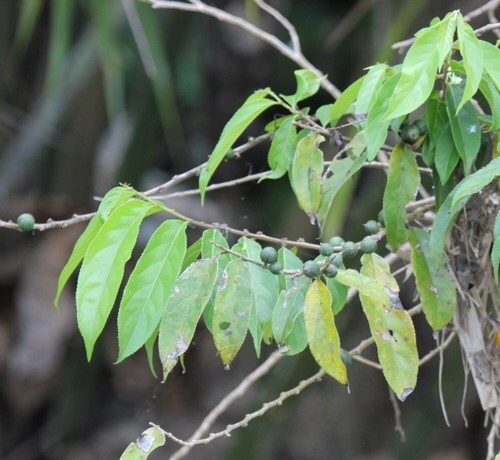
The ripe fruit are eaten.
Where to Find It
It is a tropical plant. It grows in dry mountain forest.
Africa, East Africa, Ethiopia, Sudan, Tanzania,
Countries: Angola, Burkina Faso, Burundi, Benin, Botswana, Congo (DRC), Central African Republic, Congo (Republic), Cote d'Ivoire, Cameroon, Cape Verde, Djibouti, Algeria, Egypt, Eritrea, Ethiopia, Gabon, Ghana, Gambia, Guinea, Equatorial Guinea, Guinea-Bissau, Kenya, Comoros, Liberia, Lesotho, Libya, Morocco, Madagascar, Mali, Mauritania, Mauritius, Malawi, Mozambique, Namibia, Niger, Nigeria, Rwanda, Seychelles, Sudan, Sierra Leone, Senegal, Somalia, South Sudan, Sao Tome & Principe, Eswatini, Chad, Togo, Tunisia, Tanzania, Uganda, South Africa, Zambia, Zimbabwe
How to Identify
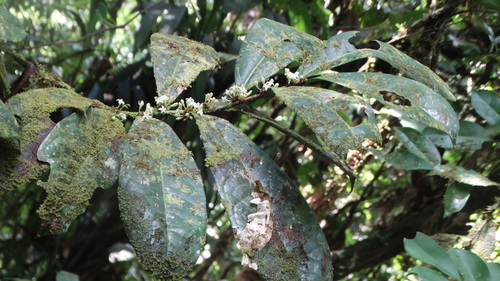
A small branched tree. It grows 15 m tall. The bark is smooth and pale grey. The leaves are simple and alternate. The leaves are small and 4-7 cm long by 2-3 cm wide. They are oval and wedge shaped at the base. There are teeth along the edge. The flowers are in groups in the axils of leaves.
Notes
Also put in the Flacourtiaceae family.
Names & Synonyms
Mgovigovi, Kokofla
References (4)
- Lovett, J. C. et al, Field Guide to the Moist Forest Trees of Tanzania. p 64
- Lulekal, E., et al, 2011, Wild edible plants in Ethiopia: a review on their potential to combat food insecurity. Afrika Focus - Vol. 24, No 2. pp 71-121
- Ruffo, C. K., Birnie, A. & Tengnas, B., 2002, Edible Wild Plants of Tanzania. RELMA p 596
- World Checklist of Useful Plant Species 2020. Royal Botanic Gardens, Kew