Rytigynia celastroides
(Baill.) Verdc.
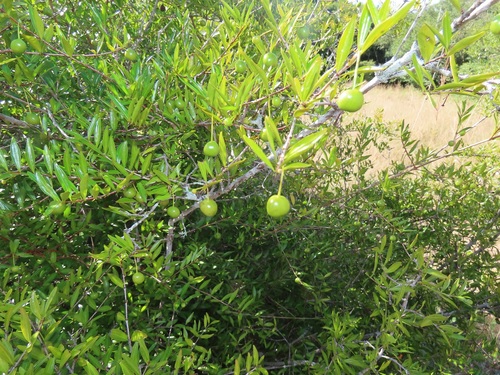
iNaturalist · cc-by-nc
(c) magdastlucia, some rights reserved (CC BY-NC), uploaded by magdastlucia
(c) magdastlucia, some rights reserved (CC BY-NC), uploaded by magdastlucia

iNaturalist · cc-by-nc
(c) Francois du Randt, some rights reserved (CC BY-NC)
(c) Francois du Randt, some rights reserved (CC BY-NC)
Where to Find It
It is a tropical plant. It can occur from sea level to 1,100 m above sea level.
Africa, East Africa, Kenya, Mozambique, South Africa, South Sudan, Tanzania,
Countries: Angola, Burkina Faso, Burundi, Benin, Botswana, Congo (DRC), Central African Republic, Congo (Republic), Cote d'Ivoire, Cameroon, Cape Verde, Djibouti, Algeria, Egypt, Eritrea, Ethiopia, Gabon, Ghana, Gambia, Guinea, Equatorial Guinea, Guinea-Bissau, Kenya, Comoros, Liberia, Lesotho, Libya, Morocco, Madagascar, Mali, Mauritania, Mauritius, Malawi, Mozambique, Namibia, Niger, Nigeria, Rwanda, Seychelles, Sudan, Sierra Leone, Senegal, Somalia, South Sudan, Sao Tome & Principe, Eswatini, Chad, Togo, Tunisia, Tanzania, Uganda, South Africa, Zambia, Zimbabwe
How to Identify
A shrub or small tree. It can grow 7.5 m tall. It is densely branched. They bark is brown or whitish-grey. Young branches can be slightly hairy The branches are often in rings of three. The leaves are on pairs or rings of three. They are narrowly oval and 2-6 cm long by 1-2.5 cm wide. They are wedge shaped or rounded at the base. The flowering shoots have 2-4 flowers. The fruit are black and a flattened round shape. They are about 1 cm across.
Names & Synonyms
Emeni, Kimeni, Kurbubit, Mtsokola wongo, Nemenio
Canthium celastroides Baill.Plectronia amaniensis K. KrauseRytigynia glabra (K. Schum.) Robynsand several others


