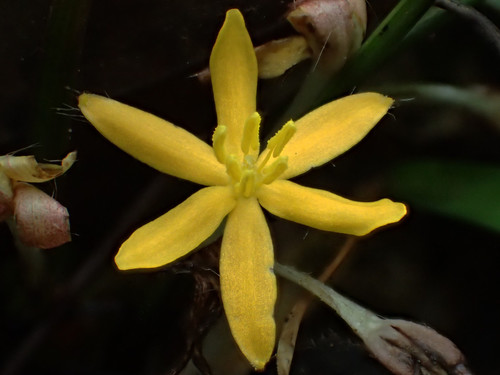
Hypoxis decumbens
L.
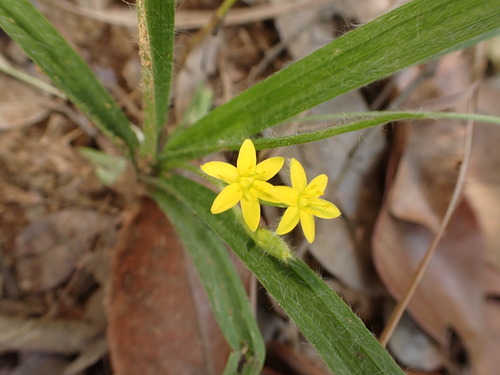
(c) agujaceratops, some rights reserved (CC BY), uploaded by agujaceratops
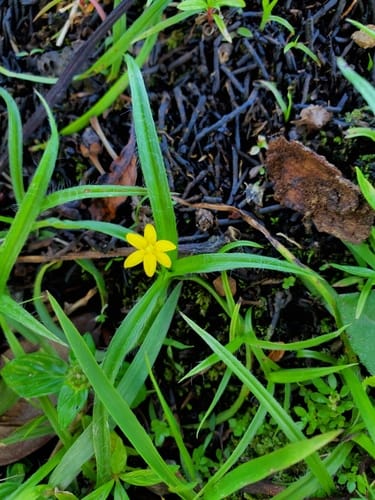
(c) Ivelisse Irizarry, some rights reserved (CC BY-NC)
What to Eat
Edible parts: Tubers, Roots, Rhizomes
The tubers, roots, and rhizomes are edible.
Where to Find It
It is a subtropical plant. In Argentina it grows from sea level to 3,000 m above sea level.
Africa, Argentina, Belize, Brazil, Central America, Colombia, Costa Rica, Cuba, Dominican Republic, Ecuador, El Salvador, French Guiana, Galapagos, Guatemala, Haiti, Honduras, Jamaica, Leeward Is., Mexico, Nicaragua, Panama, Paraguay, Peru, Puerto Rico, South Africa, South America, Trinidad-Tobago, Uruguay, Venezuela, West Indies, Winward Is.,
How to Identify
A perennial herb in the Hypoxidaceae family with yellow flowers, native to subtropical South America where it grows from sea level to 3,000 m elevation in Argentina.
Nutrition Score: 2/100
| Part | Moisture | kJ | kcal | Protein | Vit A | Vit C | Iron | Zinc |
|---|---|---|---|---|---|---|---|---|
| Tubers | — | — | 8.6 | — | — | — | — | — |
How to Grow
Hypoxis species are generally not very cold tolerant plants and most species are badly damaged or killed by even light frosts. They will usually grow well in a Mediterranean type of climate with little or no frost. Species in this genus generally require a light, freely draining soil and a position in full sun or light shade. Hypoxis species greatly resent root disturbance, plants should be placed in their permanent positions as soon as possible and left undisturbed for as long as possible.
Propagation: Seed - best sown as soon as it is ripe. Division.
Medicinal Uses
The leaves are antispasmodic. The flowers are emmenagogue. A decoction of the roots is used in the treatment of diarrhoea.
Wikipedia
Source ↗Hypoxis decumbens, the coquí, is a species of plant in the Hypoxidaceae, considered by some authors to be included within the Liliaceae or Amaryllidaceae. The species is widespread across South America, Central America, Mexico, and the West Indies.
Names & Synonyms
Macarico, Marico-bravo, Tiririca-de-flor-amarela
References (5)
- Alimenticias - FloraSBS
- INFOODSUpdatedFGU-list.xls
- Kew Plants of the World On line
- Kinupp, V. F., 2007, Plantas alimenticias nao-convencionais da regiao metropolitana de Porto Alegre, RS, Brazil p 79
- Kinupp, V. F. & Bergman, I., 2008, Protein and minerals of native species, potential vegetables and fruits. Cienc.Tecnol. Aliment. Vol. 28 No. 4 Campinas Oct/Dec.