Panicum repens
L.
Couch panicum, Torpedo grass
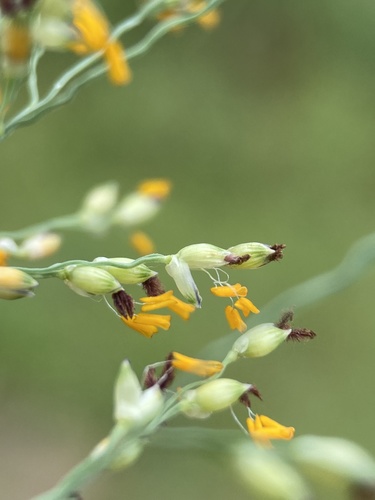
(c) Matt Berger, some rights reserved (CC BY), uploaded by Matt Berger
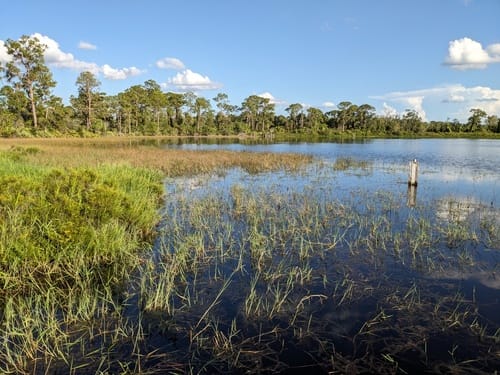
no rights reserved
What to Eat
Edible parts: Seeds ?
Seeds are potentially edible (use uncertain).
Where to Find It
It is a tropical plant. It grows in savannah woodland. It can be near small lakes and rice fields. It grows in moist places and along streams. In Argentina it grows below 500 m above sea level. It can tolerate salt. In Sichuan and Yunnan.
Africa, Argentina, Asia, Botswana, Brazil, China, East Africa, Fiji, Guinea, Guinée, Guinea-Bissau, Malawi, Maldives, Mozambique, Myanmar, Rotuma, Saudi Arabia, SE Asia, South America, Taiwan, West Africa,
How to Identify
A grass that keeps growing from year to year. It has rhizomes. The stems can be erect or bending over. They are 30-125 cm long. The leaf blades are 7-25 cm long by 2-8 mm wide.
How to Grow
Panicum repens is a plant of the tropics and subtropics, extending as far north as southern Europe. It can be found at elevations up to 2,000 metres in the tropics. It grows best in areas where annual daytime temperatures are within the range 18 - 26°c, but can tolerate 13 - 35°c. It is not very cold tolerant and can be killed by persistent frost. It prefers a mean annual rainfall in the range 800 - 1,800mm, but tolerates 550 - 4,300mm. Prefers a sunny position, tolerating light shade. Prefers a snady soil, tolerating heavy soils that are moist, and generally succeeding in most moist to wet soils of moderate fertility. Prefers a pH in the range 4.5 - 6.2, tolerating 4 - 7.7. The plant is drought tolerant when growing in soils with a relatively high water table, and can also survive several days of standing water. A plant that can spread widely by means of its rhizomatous rootstock, Panicum repens has been introduced as a fodder crop in many parts of the tropics and subtropics. In most instances it has not proved to be invasive, but in some areas it has become a serious weed. It has proved to be a particularly difficult to control in southeastern N. America - it is listed as a prohibited noxious weed in Arizona and as a noxious weed in Alabama, Hawaii and Texas. In Florida it is designated an invasive exotic. The plant is resistant to fire, the rhizomes surviving and quickly sending up new growth.
Propagation: Seed - surface sow, or only just cover the seed, in a sunny position and keep the soil mix moist. Fresh seed may require a period of dormancy before it will germinate. Division. The rhizome produces axillarly buds along its length. Most of these remain dormant unless the rhizome is fragmented. Small lengths of rhizome 5cm long will usually have one or more buds and these will soon produce new growth and quickly develop into a new plant.
Other Uses
With its aggressively spreading rhizomes that can grow for several metres, this is a useful species for binding coastal sands, lake shores and 20 - 30° steep pond slopes. It is a useful species for reclaiming saline soils.
Wikipedia
Source ↗Panicum repens is a species of grass known by many common names, including torpedo grass, creeping panic, panic rampant, couch panicum, wainaku grass, quack grass, dog-tooth grass, and bullet grass. Its exact native range is obscure. Sources suggest that the grass is native to "Africa and/or Asia", "Europe or Australia", "Eurasia", "Australia", "Europe, Asia, and Africa", or other specific regions, including the Mediterranean, and Argentina. It is present in many places as an introduced species and often a noxious weed. It has been called "one of the world's worst weeds."
Names & Synonyms
Grama, Kudhihui, Mphunga, Myet-kha, Name, Nancova, Otigna, Torpedo grass, Uncanda, Uof
References (3)
- Al-Sodany, Y. M., et al, 2013, Medicinal Plants in Saudi Arabia: I. Sarrwat Mountains at Taif, KSA. Academic Journal of Plant Sciences 6 (4): 134-145
- INFOODSUpdatedFGU-list.xls
- Sujanapal, P., & Sankaran, K. V., 2016, Common Plants of Maldives. FAO & Kerala FRI, p 194


