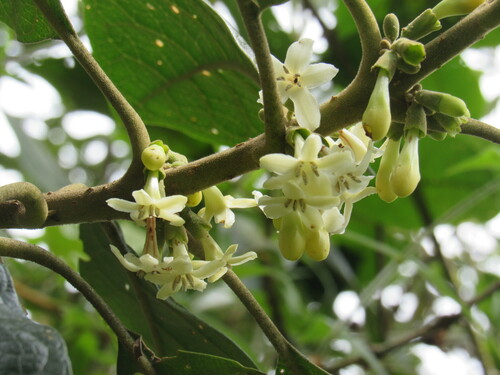
Thymus saturejoides
Coss.

iNaturalist · cc-by-nc
(c) Thomas Friedrich, some rights reserved (CC BY-NC), uploaded by Thomas Friedrich
(c) Thomas Friedrich, some rights reserved (CC BY-NC), uploaded by Thomas Friedrich

iNaturalist · cc-by
(c) Oleg Kosterin, some rights reserved (CC BY), uploaded by Oleg Kosterin
(c) Oleg Kosterin, some rights reserved (CC BY), uploaded by Oleg Kosterin

iNaturalist · cc-by-nc
(c) Thomas Menut, some rights reserved (CC BY-NC), uploaded by Thomas Menut
(c) Thomas Menut, some rights reserved (CC BY-NC), uploaded by Thomas Menut
What to Eat
Edible parts: Leaves, Flowers, Flavouring
The leaves and flowers are used to flavor snail soup and other dishes, and are also brewed into a drink.
Where to Find It
It is a Mediterranean climate plant.
Africa, Mediterranean, Morocco, North Africa,
Countries: Albania, Angola, Bosnia & Herzegovina, Burkina Faso, Burundi, Benin, Botswana, Congo (DRC), Central African Republic, Congo (Republic), Cote d'Ivoire, Cameroon, Cape Verde, Cyprus, Djibouti, Algeria, Egypt, Eritrea, Spain, Ethiopia, France, Gabon, Ghana, Gambia, Guinea, Equatorial Guinea, Greece, Guinea-Bissau, Croatia, Israel, Italy, Kenya, Comoros, Lebanon, Liberia, Lesotho, Libya, Morocco, Monaco, Montenegro, Madagascar, Mali, Mauritania, Malta, Mauritius, Malawi, Mozambique, Namibia, Niger, Nigeria, Rwanda, Seychelles, Sudan, Slovenia, Sierra Leone, Senegal, Somalia, South Sudan, Sao Tome & Principe, Syria, Eswatini, Chad, Togo, Tunisia, Turkey, Tanzania, Uganda, South Africa, Zambia, Zimbabwe
How to Identify
A herb in the mint family (Lamiaceae) native to Mediterranean climates.
Names & Synonyms
Azoukenni, Zaatar
References (3)
- Ghanimi, R., et al, 2022, Ethnobotanical study on wild edible plants traditionally used by Messiwa people, Morocco. Journal of Ethnobiology and Ethnomedicine. 18:16
- INFOODSUpdatedFGU-list.xls
- Nassif, F., & Tanji, A., 2013, Gathered food plants in Morocco: The long forgotten species in Ethnobotanical Research. Life Science Leaflets 3:17-54