Galax urceolata
(Poir.) Brummitt
Beetlewood

(c) DT, some rights reserved (CC BY-NC), uploaded by DT

(c) Douglas Goldman, some rights reserved (CC BY-SA), uploaded by Douglas Goldman
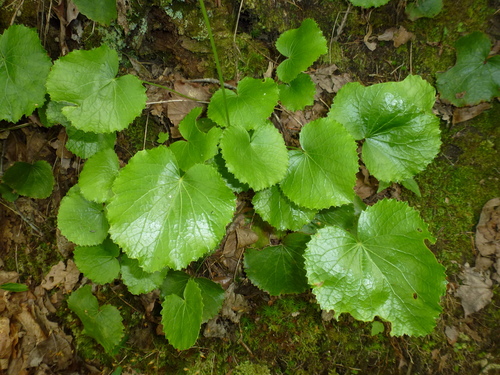
no rights reserved, uploaded by elizard
What to Eat
Edible parts: Medicine
No edible uses are known.
How to Identify
An evergreen perennial groundcover reaching 0.2 m tall and 0.3 m wide with moderate growth rate. Hardy to UK zone 5. Year-round foliage; flowers June to July. Hermaphrodite. Grows in light sandy to heavy clay soils in mildly acid to very acid conditions. Tolerates full to semi-shade and adapts to dry or moist soil. Leaves develop bronze-red winter coloring. Space plants 25 cm apart.
How to Grow
Propagation: Sow seed in early spring or autumn in a shaded cold frame. Prick seedlings into individual pots once large enough to handle and grow on in a shady greenhouse position for at least the first winter. Plant out in late spring or early summer after the last expected frosts. Division with care can be done in early spring.
Medicinal Uses
The plant is used to heal wounds and cuts of all kinds. An infusion of the root is used to treat kidney problems.
Other Uses
The plant makes an attractive ground cover, with leaves turning bronze-red in winter. Space plants approximately 25cm apart in each direction.
Wikipedia
Source ↗An evergreen perennial groundcover reaching 0.2 m tall and 0.3 m wide with moderate growth rate. Hardy to UK zone 5. Year-round foliage; flowers June to July. Hermaphrodite. Grows in light sandy to heavy clay soils in mildly acid to very acid conditions. Tolerates full to semi-shade and adapts to dry or moist soil. Leaves develop bronze-red winter coloring. Space plants 25 cm apart.
Notes
Possibly not edible.
Names & Synonyms
References (1)
- Jackes, D. A., Edible Forest Gardens