Geranium maculatum
L.
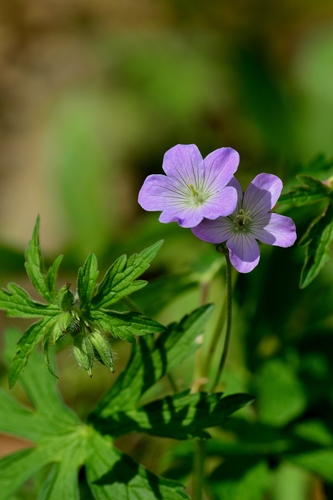
(c) Mark Kluge, some rights reserved (CC BY-NC), uploaded by Mark Kluge
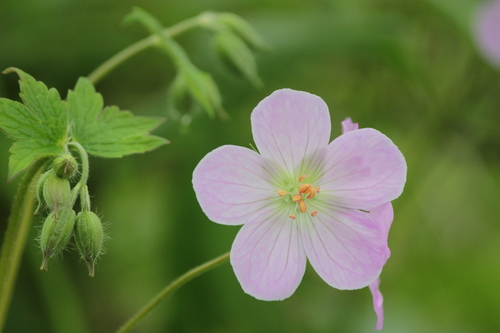
(c) Robb Miller, some rights reserved (CC BY-NC)
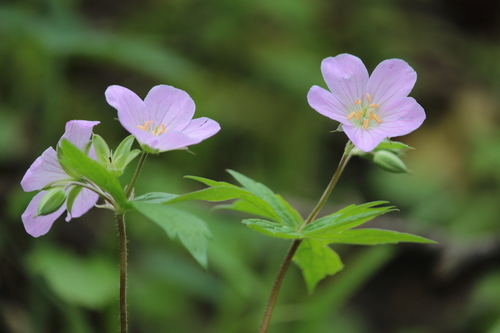
(c) Robb Miller, some rights reserved (CC BY-NC)
What to Eat
Edible parts: Medicine
None known.
Where to Find It
It is a temperate plant. It suits hardiness zones 4-8.
Canada, North America, USA,
How to Identify
A medium-growing perennial reaching 0.6 m (2 ft) tall by 0.5 m (1 ft 8 in) wide, flowering from April to July. This hermaphroditic, insect-pollinated plant requires full sun and cannot grow in shade. It adapts to sandy, loamy, or clay soils with mildly acidic to basic pH and prefers moist or wet soil conditions. Hardy to UK zone 5.
How to Grow
Succeeds in any moderately fertile retentive soil in a sunny position. Tolerates a wide range of soil types, including water-logged soils. Plants are hardy to about -25°c. Members of this genus are rarely if ever troubled by browsing deer or rabbits.
Propagation: Sow seed in spring in a cold frame. Once seedlings are large enough to handle, prick them out into individual pots and plant out during summer. Divide plants in spring or autumn. Larger clumps can be replanted directly into permanent positions, though smaller clumps are better potted up and grown on in a cold frame until rooting well, then planted out in spring.
Medicinal Uses
The whole plant, but especially the root, is antiseptic, highly astringent, diuretic, styptic, and tonic. The plants are rich in tannin, with the root containing 10–20%. An infusion of the whole plant or roots alone is used to treat diarrhoea (particularly in children and the elderly), dysentery, irritable bowel syndrome, cholera, kidney complaints, bleeding, and a wide range of other ailments, often in combination with other herbs. Externally, it is applied to purulent wounds, haemorrhoids, thrush, vaginal discharges, and inflammations of the mouth. Roots are best harvested as the plant comes into flower and can be dried and stored after autumn harvest. Leaves are harvested as the plant comes into flower and dried for later use.
Other Uses
A brown dye is obtained from the flowers. The roots and leaves are rich in tannin. Plants are suitable for ground cover when spaced about 45cm apart each way.
Wikipedia
Source ↗Geranium maculatum, the wild geranium, spotted geranium, or wood geranium, is a perennial plant native to woodlands in eastern North America, from southern Manitoba and southwestern Quebec south to Alabama and Georgia and west to Oklahoma and South Dakota.
References (1)
- Jackes, D. A., Edible Forest Gardens