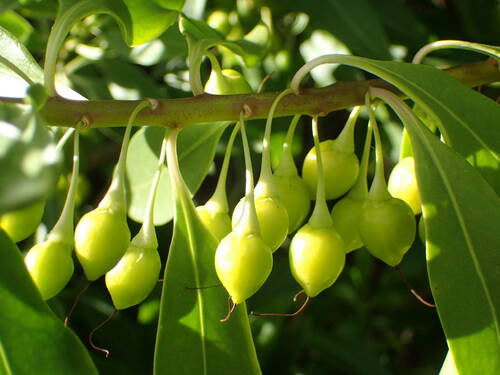
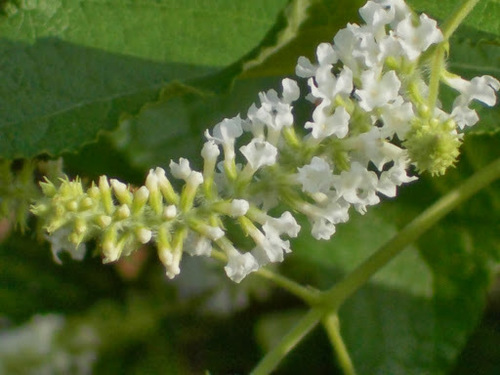
Digitalis purpurea
L.
Common foxglove
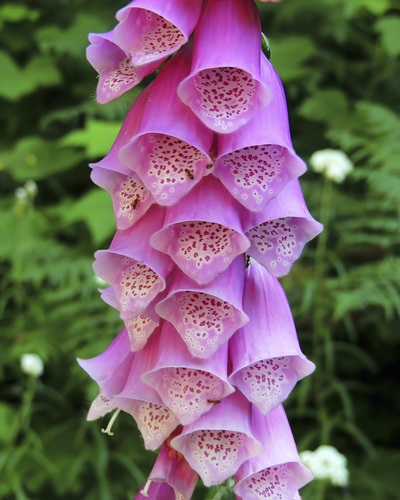
(c) z7nikon, some rights reserved (CC BY-NC), uploaded by z7nikon

(c) Norbert Sauberer, some rights reserved (CC BY-NC), uploaded by Norbert Sauberer

(c) nbasargin, some rights reserved (CC BY)
What to Eat
Edible parts: Flower nectar, CAUTION This plant is very poisonous.
None known
Known Hazards
Documented Toxic Effects
Source: Encyclopedia of Life TraitBank. Toxicity often varies by plant part — consult the hazards section above for preparation-specific details.
Where to Find It
It is a Mediterranean climate plant. In Sichuan.
Argentina, Asia, Australia, Belgium, Brazil, Britain, Chile, China, Czech, Europe, Falklands, France, Germany, Ireland, Korea, Luxembourg, Mediterranean, Morocco, Myanmar, Nepal, Norway, Portugal, Scandinavia, SE Asia, Serbia, Slovenia, South America, Spain, Sweden, Tasmania, Uruguay,
How to Identify
A herb. It can be an annual or keep growing for a few years. It grows 60-120 cm tall. It has grey-white hairs. The leaves at the base are in a ring. The leaf stalks is narrow, winged and 15 cm long. The leaves are 5-15 cm long. They taper to the base. The stem leaves get smaller up the stem. The flowers are purple-white.
How to Grow
Easily grown in ordinary garden soil, especially if it is rich in organic matter. Prefers a light dry soil in semi-shade but succeeds in full sun if the soil is moist. Grows well in acid soils. Plants are hardy to about -25°c. The foxglove is a very ornamental plant that is easily naturalized in the semi-shade of a woodland. It contains glycosides and forms the basis of an important heart medicine for which it is cultivated commercially. This species is commonly used by herbalists, whereas D. lanata is more commonly grown for supplying the pharmaceutical industry. The plant contains much greater concentrations of the medically active ingredients when it is grown in a sunny position. The flowers are very attractive to bees. Individual plants can produce up to 2 million seeds. Members of this genus are rarely if ever troubled by browsing deer or rabbits. A good companion plant, it stimulates the growth of nearby plants, growing well with pine trees. In garden design, as well as the above-ground architecture of a plant, root structure considerations help in choosing plants that work together for their optimal soil requirements including nutrients and water.
Propagation: Surface sow seed in early spring in a cold frame. Germination typically takes 2–4 weeks at 20°C. Prick seedlings into individual pots when large enough to handle and plant out during summer. Where seed is plentiful, it can be sown directly outdoors in situ in spring or autumn.
Medicinal Uses
Foxglove is a widely used herbal medicine with a recognised stimulatory effect on the heart, also employed in allopathic medicine for heart complaints. It enables a diseased heart to beat more slowly, powerfully, and regularly without increased oxygen demand, while also stimulating urine flow, which reduces blood volume and lessens the cardiac load. The plant contains cardiac glycosides including digoxin, digitoxin, and lanatosides. Digitoxin strengthens the heartbeat rapidly but is excreted very slowly; digoxin is therefore preferred for long-term medication. The leaves are cardiac, diuretic, stimulant, and tonic. They should only be harvested from second-year plants, once the flowering spike has developed and around two thirds of the flowers have opened — harvested at other times, the concentration of medically active alkaloid is lower. The seed has also been used in the past. The leaves are strongly diuretic and beneficial in the treatment of dropsy. The therapeutic dose is very close to the lethal dose, so great care must be exercised. A homeopathic remedy made from the leaves is used in the treatment of cardiac disorders.
Other Uses
An infusion of the plant prolongs the life of cut flowers. Root crops growing near foxglove store better. An apple-green dye is obtained from the flowers.
Wikipedia
Source ↗Digitalis purpurea, the foxglove or common foxglove, is a toxic species of flowering plant in the plantain family Plantaginaceae, native to and widespread throughout most of temperate Europe. It has also naturalized in parts of North America, as well as some other temperate regions. The plant is a popular garden subject, with many cultivars available. It is the original source of the heart medicine digoxin (also called digitalis or digitalin). This biennial plant grows as a rosette of leaves in the first year after sowing, before flowering and then dying in the second year (i.e., it is monocarpic). It generally produces enough seeds so that new plants will continue to grow in a garden setting.
Names & Synonyms
Chupera, Dedalera, Digitalis, Rdeči naprstec, Revebjelle, Tila-pup-hpi, Tilpushpi
References (4)
- Girard, N. J., 2020, Sustainable Foraging of Wild Edible Plants in Norway. A Biocultural Approach. M. Sc. thesis Norwegian University. p 133
- Gonzalez, J. A., et al, 2011, The consumption of wild and semi-domesticated edible plants in the Arribes del Duero (Salamanca-Zamora, Spain): an ananalysis of traditional knowledge. Genetic Resources and Crop Evolution 58:991-1006
- Kew, Plants of the World on Line
- Upson, R., & Lewis R., 2014, Updated Vascular Plant Checklist and Atlas for the Falkland Islands. Falklands Conservation and Kew.