Pogostemon elsholtzioides
Benth.
LamiaceaeLeaves
iNaturalist · cc-by-nc
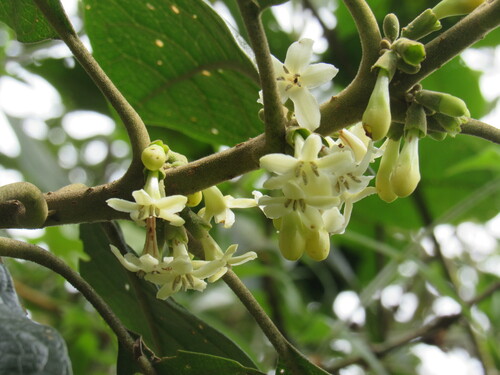
(c) Chitra Shanker, some rights reserved (CC BY-NC), uploaded by Chitra Shanker
(c) Chitra Shanker, some rights reserved (CC BY-NC), uploaded by Chitra Shanker

iNaturalist · cc-by-nc
(c) amolmm, some rights reserved (CC BY-NC)
(c) amolmm, some rights reserved (CC BY-NC)

iNaturalist · cc-by-nc
(c) amolmm, some rights reserved (CC BY-NC)
(c) amolmm, some rights reserved (CC BY-NC)
What to Eat
Edible parts: Leaves
Young leaves are boiled with rice and eaten as a vegetable.
Where to Find It
It is a subtropical plant. It grows in cleared wet broad-leaved forest.
Asia, Bhutan, China, Himalayas, India, Myanmar, Northeastern India, SE Asia,
Countries: United Arab Emirates, Afghanistan, Armenia, Azerbaijan, Bangladesh, Bahrain, Brunei, Bhutan, China, Georgia, Indonesia, Israel, India, Iraq, Iran, Jordan, Japan, Kyrgyzstan, Cambodia, North Korea, South Korea, Kuwait, Kazakhstan, Laos, Lebanon, Sri Lanka, Myanmar, Mongolia, Maldives, Malaysia, Nepal, Oman, Philippines, Pakistan, Qatar, Saudi Arabia, Singapore, Syria, Thailand, Tajikistan, Timor-Leste, Turkmenistan, Turkey, Taiwan, Uzbekistan, Vietnam, Yemen
How to Identify
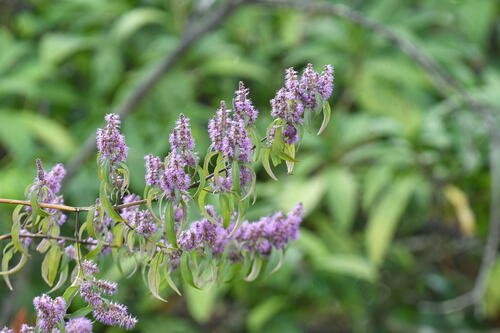
A shrub. It grows 1-3 m tall. The plant has an aroma. The stems are branched. Young stems are hairy and old stems are purple-brown. The leaves are sword shaped and 5-12 cm long by 1-4 cm wide. There is a tip at the end and they taper to the base. There are teeth along the edge. The leaves are dark green above and more pale underneath. The spikes are 3-9 cm long by 1.5 cm wide. They are in rings. The flowers are mauve to purple.
Names & Synonyms
Phiziio
References (1)
- Pfoze, N. L., et al, 2012, Survey and assessment of floral diversity on wild edible plants from Senapati district of Manipur, Northeast India. Journal or Biodiversity and Environmental Sciences. 1(6):50-52