Galium hypocarpium
(L.) Endl. ex Griseb.
Galia
RubiaceaeLeaves

iNaturalist · cc-by
(c) Neptalí Ramírez Marcial, some rights reserved (CC BY), uploaded by Neptalí Ramírez Marcial
(c) Neptalí Ramírez Marcial, some rights reserved (CC BY), uploaded by Neptalí Ramírez Marcial

iNaturalist · cc-by
(c) Neptalí Ramírez Marcial, some rights reserved (CC BY), uploaded by Neptalí Ramírez Marcial
(c) Neptalí Ramírez Marcial, some rights reserved (CC BY), uploaded by Neptalí Ramírez Marcial
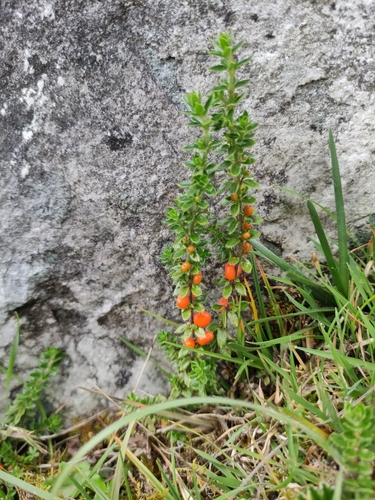
iNaturalist · cc-by-nc
(c) Edgar Segovia, some rights reserved (CC BY-NC), uploaded by Edgar Segovia
(c) Edgar Segovia, some rights reserved (CC BY-NC), uploaded by Edgar Segovia
What to Eat
Edible parts: Leaves ?
The leaves may be edible.
Where to Find It
It is a tropical plant. In Argentina it grows from sea level to 4,000 m above sea level.
Argentina, Bolivia, Brazil, Central America, Chile, Colombia, Costa Rica, Dominican Republic, Ecuador, Guadeloupe, Guatemala, Guyana, Haiti, Honduras, Jamaica, Mexico, Nicaragua, Panama, Paraguay, Peru, South America, Uruguay, Venezuela, West Indies,
Countries: Antigua & Barbuda, Argentina, Barbados, Bolivia, Brazil, Bahamas, Belize, Chile, Colombia, Costa Rica, Cuba, Dominica, Dominican Republic, Ecuador, Grenada, French Guiana, Guatemala, Guyana, Honduras, Haiti, Jamaica, St Kitts & Nevis, St Lucia, Mexico, Nicaragua, Panama, Peru, Puerto Rico, Paraguay, Suriname, El Salvador, Trinidad & Tobago, Uruguay, St Vincent, Venezuela
How to Identify
A herb. It keeps growing from year to year. It grows 30 cm tall. The leaves do not have stalks. The leaves are 1-1.3 cm long by 0.3-0.7 cm wide.
Names & Synonyms
Achiotillo, Coralito, Ocho de mayo, Perlilla, Relbun, Sacha achiote, Urku kuralis
Galium albicans Wedd.and others
Relbunium bangii RusbyRelbunium hypocarpium (L.) Hemsl.and others
References (3)
- Leon-Lobos, P., et al, 2022, Patterns of Traditional and Modern Uses of Wild Edible Native Plants of Chile: Challenges and Future Perspectives. Plants (Basel) v 11 (6) Table S1
- Rapoport, E. H., et al, 1995, Edible Weeds: A Scarcely Used Resource. Bulletin of the Ecological Society of America. Vol. 76 No. 3 pp 163-166 (As Relbunium hypocarpum)
- Torre, de la, L., et al, 2008, Enciclopedia de las Plantas Útiles del Ecuador. Herbario QCA. Pontificia Universidad Católica del Ecuador. p 545


