Piper interruptum
Opiz
(c) 羅忠良, some rights reserved (CC BY-NC), uploaded by 羅忠良

(c) Tony Eales, some rights reserved (CC BY-SA)

(c) galanhsnu, some rights reserved (CC BY-NC)
What to Eat
Edible parts: Stem
The stem is used as a flavouring. It is very spicy, with peppery and chilli tones, and leaves a lingering aftertaste. It is used especially in Northern Laos and northern Thailand food, and has a slightly numbing effect on the tongue.
Where to Find It
It is a tropical plant. In north Australia it grows from sea level to 750 m above sea level.
Asia, Australia, Indochina, Papua New Guinea, PNG, SE Asia, Thailand,
How to Identify
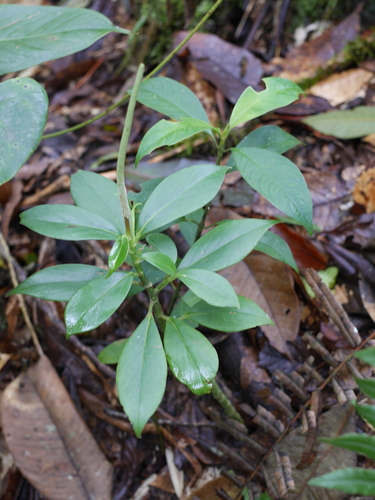
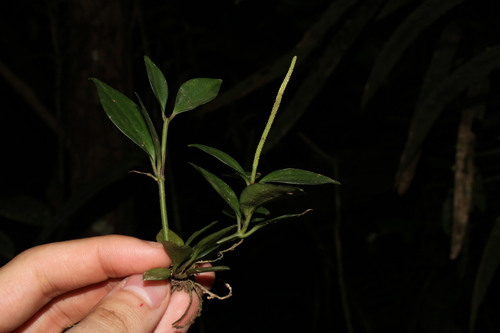
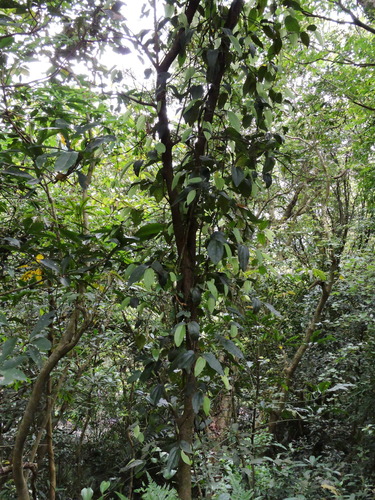
A slender vine. The stem is 2 cm across. The leaves are 8-12 cm long by 4-7 cm wide. The leaf stalk is 1-1.5 cm long. The flowers are opposite the leaves. The flowering shoots are 7-9 cm long.
How to Grow
A dioecious species, both male and female forms need to be grown if fruit and seed are required.
Medicinal Uses
The compounds crotepoxide, eupomatene and pipercallosine have been extracted from the stems of this plant. In parts of Asia this species has been used as an anti-flatulent, an emollient to relieve coughing and an antiseptic.
Wikipedia
Source ↗Piper interruptum is a vine in the pepper family Piperaceae, native to the eastern parts of Southeast Asia and to Melanesia and Queensland.
Names & Synonyms
Sakhan
References (1)
- Nakahara, K. et al, 2002, Antimutagenicity of Some Edible Thai Plants, and a Bioactive Carbazole Alkaloid, Mahanine, Isolated from Micromelum minutum. Journal of Agricultural and Food Chemistry. 50: 4796-4892