Rhizophora stylosa
Griff.
Stilted mangrove
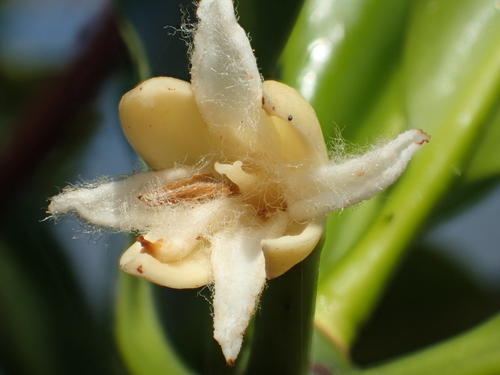
no rights reserved, uploaded by 葉子
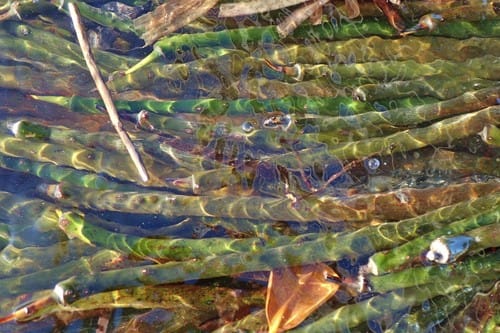
(c) Nuno Veríssimo P., some rights reserved (CC BY-NC-SA)
What to Eat
Edible parts: Fruit
The fruit are edible.
Where to Find It
It is a tropical plant. It grows in mangrove swamps in mud. It can grow in colder climates. It grows on corals and in sandy and stony soils. It can tolerate salt.
Asia, Australia, Brunei, Cambodia, China, Fiji, Indochina, Indonesia, Japan, Malaysia, Micronesia, Myanmar, Pacific, Papua New Guinea, PNG, Philippines, Ryukyu, Samoa, SE Asia, Singapore, Solomon Islands, Taiwan, Thailand, Tuvalu, Vietnam,
How to Identify
A mangrove. It grows 3-30 m tall. It has many stilt roots and aerial roots. The leaves are opposite and narrowly oval. The flowers occur as 2-14 together in a forking flower arrangement. The fruit are small and brown. They are 3-5 cm long. This sprouts while on the tree. The propagules (seedlings) are 20-60 cm long.
How to Grow
A plant of the moist to wet, coastal tropics. It grows best in areas where annual daytime temperatures are within the range 22 - 34°c, but can tolerate 12 - 44°c. It prefers a mean annual rainfall in the range 1,500 - 3,000mm, but tolerates 650 - 3,500mm. Grows best in a sunny position. Prefers a fertile, loamy to clayey soil. Tolerant of high levels of salt in the soil. Prefers a pH in the range 6.7 - 7.2, tolerating 6.5 - 7.5.
Other Uses
A red latex obtained from the plant is used as a hair dye and to paint pottery. The wood is hard and durable. It is little used due to its small dimensions. The stilt roots are flexible and were traditionally used for making bows. The wood is used for fuel and to make charcoal.
Wikipedia
Source ↗Rhizophora stylosa, the spotted mangrove, red mangrove, small stilted mangrove or stilt-root mangrove, is a small to medium-sized evergreen tree in the family Rhizophoraceae. The specific epithet stylosa is from the Latin meaning 'stylus form', referring to the flower.
Names & Synonyms
Bakau pasir, Red mangrove
References (6)
- Franklin, J., Keppel, G., & Whistler, W., 2008, The vegetation and flora of Lakeba, Nayau and Aiwa Islands, Central Lau Group, Fiji. Micronesica 40(1/2): 169–225, 2008
- Jackes, B. R., 2010, Plants of Magnetic Island. 3rd Edition. James Cook University, Australia. p 21
- Melzer, R. & Plumb, J., 2011, Plants of Capricornia. Belgamba, Rockhampton. p 289
- Thaman, R. R, 2016, The flora of Tuvalu. Atoll Research Bulletin No. 611. Smithsonian Institute p 108
- Tiwi Plants and Animals. 2001, Aboriginal flora and fauna knowledge from Bathurst and Melville Islands, northern Australia. Northern Territory Botanical Bulletin; No. 24 p 76
- World Checklist of Useful Plant Species 2020. Royal Botanic Gardens, Kew
More from Rhizophoraceae


