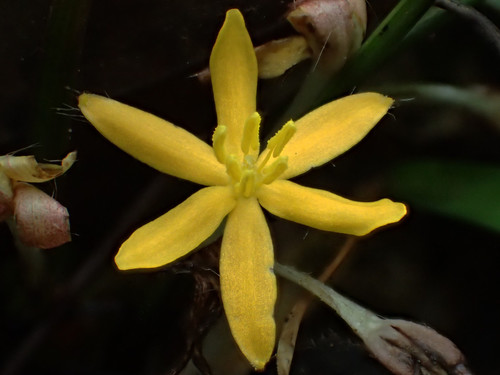
Hypoxis aurea
Lour.
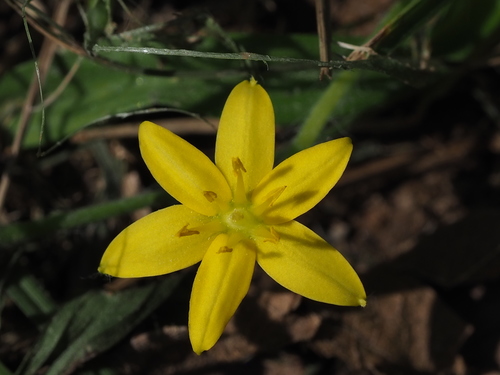
no rights reserved, uploaded by 葉子
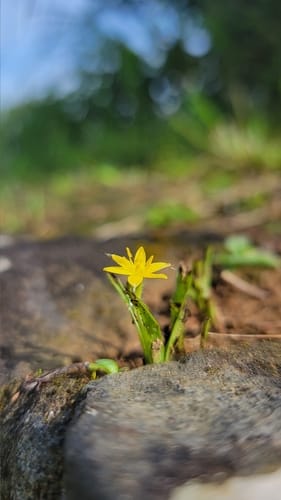
(c) bettytsai, some rights reserved (CC BY-NC)
What to Eat
Edible parts: Fruit
The fruit is eaten.
Where to Find It
It is a tropical plant. It grows in limestone areas. It grows on moist grassy slopes from near sea level to 2,600 m above sea level. In Sichuan and Yunnan.
Asia, Bhutan, Cambodia, China, Himalayas, India, Indochina, Indonesia, Japan, Korea, Laos, Myanmar, Nepal, Pakistan, Papua New Guinea, PNG, Philippines, SE Asia, Taiwan, Thailand, Vietnam,
How to Identify
A small plant. The rhizomes are round or cylinder shaped. There are 4-12 leaves. They are narrow and 7-30 cm long by 2-6 mm wide. The flowering stems are 3-10 cm long. They are slender with 1 or 2 flowers. The fruit is a capsule 6-12 mm long.
How to Grow
Hypoxis species are generally not very cold tolerant plants and most species are badly damaged or killed by even light frosts. They will usually grow well in a Mediterranean type of climate with little or no frost. Species in this genus generally require a light, freely draining soil and a position in full sun or light shade. Hypoxis species greatly resent root disturbance, plants should be placed in their permanent positions as soon as possible and left undisturbed for as long as possible.
Propagation: Seed - best sown as soon as it is ripe. Division.
Other Uses
An extract of the leaves is used as an ingredient in commercial cosmetic preparations as a bleaching agent and skin conditioner.
Names & Synonyms
References (1)
- Thitiprasert, W., et al, 2007, Country report on the State of Plant Genetic Resources for Food and Agriculture in Thailand (1997-2004). FAO p 95