Synandrospadix vermitoxicus
(Griseb.) Engl
AraceaeRoots
iNaturalist · cc0
no rights reserved
no rights reserved
iNaturalist · cc0
no rights reserved
no rights reserved
iNaturalist · cc0
no rights reserved
no rights reserved
What to Eat
Edible parts: Tubers, Root
The tubers are eaten roasted or boiled with fish fats, salt, or chili, and must be cooked before consumption.
Where to Find It
It is a temperate plant. In Argentina it grows between 400-1,700 m above sea level.
Argentina, Paraguay, South America*,
How to Identify
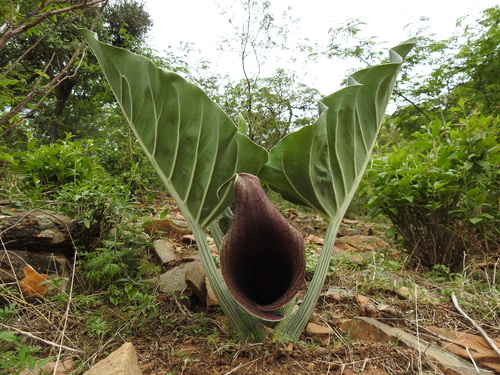
A taro family herb. It keeps growing from year to year. It develops tubers. The leaves are simple and heart shaped or delta shaped.
Names & Synonyms
Laap lapitie, Sihie, Yatapomxek
Asterostigma vermitoxicum Griseb.Lilloa puki Speg.Staurostigma vermitoxicum (Griseb.) Engl.
References (3)
- Arenas, P. and Scarpa, G. F., 2006, Edible wild plants of the Chorote Indians, Gran Chaco, Argentina. Botanical Journal of the Linnean Society. Vol. 153 (1): pp 73-85
- Polini, G., et al, Useful and edible plants of Paraguay Region of Chaco. p 20
- Scarpa, G. F., 2009, Wild food plants used by the indigenous peoples of South American Gran Chaco: A general synopsis and intercultural comparison. Journal of Applied Botany and Food Quality 83:90-101


