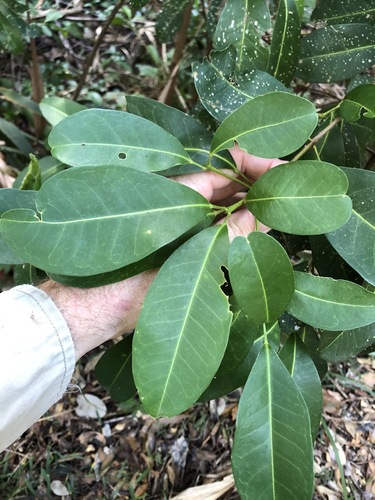
Acronychia acidula
F. Muell.
Lemon aspen
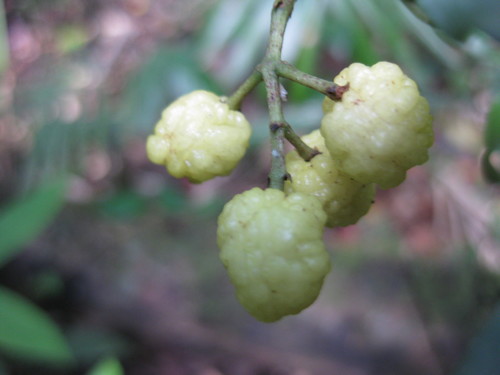
(c) Andrew Thornhill, some rights reserved (CC BY), uploaded by Andrew Thornhill
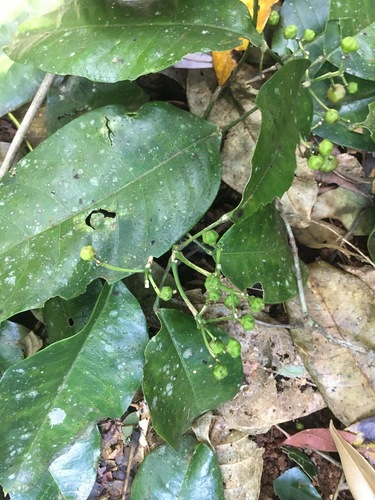
(c) Rene, some rights reserved (CC BY-NC)
What to Eat
Edible parts: Fruit, Seeds
Lemon aspen fruit has a grapefruit and lime-like flavor, and is popular in beverages, sauces and confectionery. The fruit has high antioxidant activity.
Where to Find It
It is a tropical plant. It is found in highland rainforest in Northeast Queensland, Australia. It grows to 1100 m altitude. It requires a well drained soil and prefers a sunny position but will grow in part shade. It can grow on a range of different soils. It can grow in cooler climates if it has good rainfall and fertile soil.
Australia*,
How to Identify
A shrub or small tree. It grows 5 m tall. There are prickles along the stem. The leaves are twice divided and there are 8-18 pairs of pinnae. There are up to 50 pairs of pinnules on each pinnae. The flowers are yellow. They are in large clusters at the ends of branches. The pods are flattened.
How to Grow
It is grown from seed. The seed are hard to remove from the fruit and the fruit can be sown whole. The seed are slow to germinate. (6 weeks to 6 months.) Cuttings root easily. The soil around the tree should not be allowed to dry out. Fruit can be difficult to harvest because the trees are large. Fruit should be harvested just before they are ripe. They are damaged if they fall and rot quickly. The fruit can be frozen easily for storage. It can also be preserved in a light sugar syrup.
Propagation: Seed - best sown fresh, when it usually germinates well without any pre-treatment. All the fruit pulp needs to be removed from the seed, which should then be sown immediately. Germination can still take 6 months or more. Cuttings of firm, current season's growth.
Wikipedia
Source ↗Acronychia acidula, commonly known as lemon aspen or lemon wood, is a species of small to medium-sized rainforest tree that is endemic to Queensland. It has simple, elliptical leaves, small groups of flowers in leaf axils and more or less spherical fruit. The aromatic and acidic fruit is harvested as a bushfood.
Production
Trees are fast growing if well watered. Fruit are mature July to September but occur from April. It often bears large numbers of fruit every second year. About 20 fruit would give 100 g of lemon aspen flesh.
Notes
There are 42-50 Acronychia species.
Names & Synonyms
Lemon wood
References (18)
- Alice, L. & O'Quinn, T., Australian Bush Superfoods. Explore Australia p 86
- Bonney, N., 1997, Economic Native Trees and Shrubs for South Australia. Greening Australia (SA) inc. Campbelltown SA 5074 p 168
- Bonney, N., 2012, Edible Wild Native Plants for Southern Australia. p 17
- Cherikoff V. & Isaacs, J., The Bush Food Handbook. How to gather, grow, process and cook Australian Wild Foods. Ti Tree Press, Australia p 198
- Cooper W & Cooper W T, 1994, Fruits of the Rain Forest. RD Press p 18
- Cooper, W. and Cooper, W., 2004, Fruits of the Australian Tropical Rainforest. Nokomis Editions, Victoria, Australia. p 456
- Cribb, A.B. & J.W., 1976, Wild Food in Australia, Fontana. p 21
- Elliot, W.R., & Jones, D.L., 1982, Encyclopedia of Australian Plants suitable for cultivation. Vol 2. Lothian. p 141
- Facciola, S., 1998, Cornucopia 2: a Source Book of Edible Plants. Kampong Publications, p 213
- Jones D, L, 1986, Ornamental Rainforest Plants in Australia, Reed Books, p 102, 340
- Nicholson, N & H., 1996, Australian Rainforest Plants 2, Terania Rainforest Publishing. NSW. p 6
- Pearson, S. & A., 1992, Rainforest Plants of Eastern Australia. Kangaroo Press p 16
- Price, S.H. & J.L., Wild Food, Medicine and useful plants of the Wet tropics. Kwik Kopy, Cairns. p 3
- Queensland Forest Service, 1991, Trees and Shrubs. Department of Primary Industries. p 63
- Recher, P, 2001, Fruit Spirit Botanical Gardens Plant Index. www.nrg.com.au/~recher/ seedlist.html p 4
- Robins, J., 1996, Wild Lime. Cooking from the Bush food garden. Allen & Unwin p 30
- Smith, K & I., 1999, Grow your own bushfoods. New Holland. Australia. p 45
- Townsend, K., 1994, Across the Top. Gardening with Australian Plants in the tropics. Society for Growing Australian Plants, Townsville Branch Inc. p 69