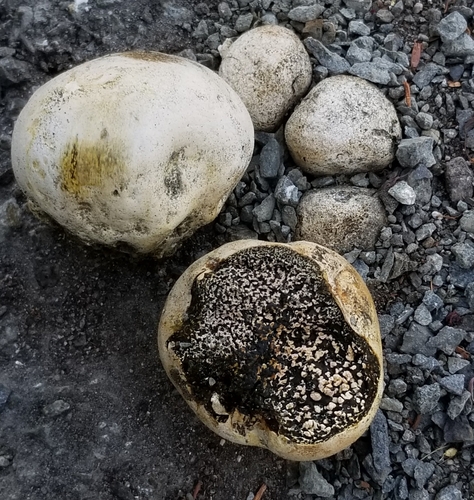
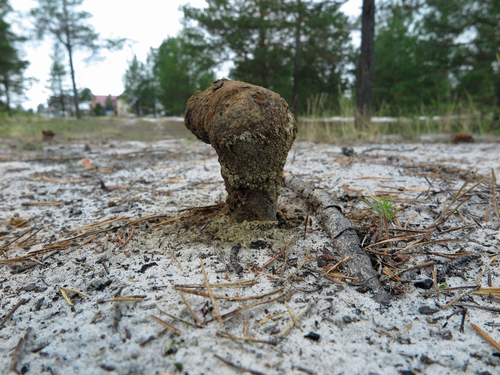
Scleroderma citrinum
Pers.
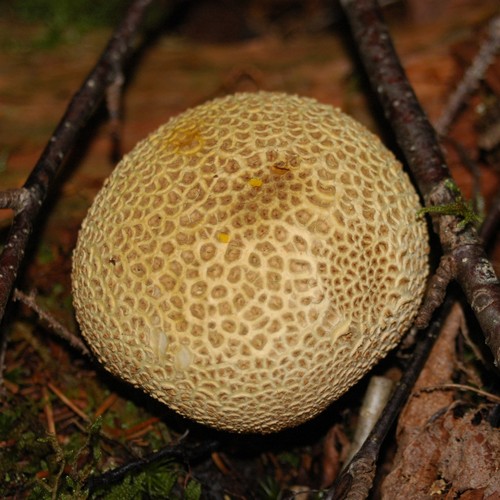
iNaturalist · cc-by-nc-nd
(c) Jason M Crockwell, some rights reserved (CC BY-NC-ND), uploaded by Jason M Crockwell
(c) Jason M Crockwell, some rights reserved (CC BY-NC-ND), uploaded by Jason M Crockwell

iNaturalist · cc-by-nc
(c) ClaireMM, some rights reserved (CC BY-NC)
(c) ClaireMM, some rights reserved (CC BY-NC)
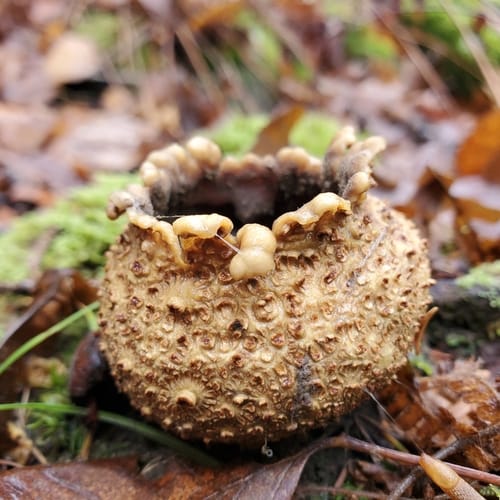
iNaturalist · cc-by-nc
(c) Emma Richter, some rights reserved (CC BY-NC)
(c) Emma Richter, some rights reserved (CC BY-NC)
What to Eat
Edible parts: Mushroom, Fungus
The mushroom is eaten.
Known Hazards
Documented Toxic Effects
diarrheagastrointestinal disorderstomach crampsvomiting
Source: Encyclopedia of Life TraitBank. Toxicity often varies by plant part — consult the hazards section above for preparation-specific details.
Where to Find It
It grows in soil in moist places in mixed forests.
Asia, Central Asia, China, Himalayas, Hong Kong, Kyrgyzstan, Nepal,
Countries: United Arab Emirates, Afghanistan, Armenia, Azerbaijan, Bangladesh, Bahrain, Brunei, Bhutan, China, Georgia, Indonesia, Israel, India, Iraq, Iran, Jordan, Japan, Kyrgyzstan, Cambodia, North Korea, South Korea, Kuwait, Kazakhstan, Laos, Lebanon, Sri Lanka, Myanmar, Mongolia, Maldives, Malaysia, Nepal, Oman, Philippines, Pakistan, Qatar, Saudi Arabia, Singapore, Syria, Thailand, Tajikistan, Timor-Leste, Turkmenistan, Turkey, Taiwan, Uzbekistan, Vietnam, Yemen
How to Identify
A mushroom fungus of the family Sclerodermataceae that grows in soil in moist places within mixed forests and is sold in local markets in Nepal.
Wikipedia
Source ↗Scleroderma citrinum, commonly known as the common earthball, pigskin poison puffball, or common earth ball, is a species of earthball fungus.
Other Information
It is sold in local markets in Nepal.
Notes
Also put in the family Lycoperdiaceae.
Names & Synonyms
Phusphure chyau, Dalle chyau
References (4)
- Boa, E. R., 2004, Wild edible fungi and their importance to people. FAO Non Wood Forest Products Booklet 17
- Devkota, S., 2008, Distribution and Status of Highland mushrooms: A study from Dolpa, Nepal. J.Nat.Hist.Mus.Vol.23,2008, 51-59
- Joshi, K. and Joshi, A. R., 2008, Ethnobotanical Studies on Some Lower Plants of the Central Development Region, Nepal. Ethnobotanical Leaflets 12:832-40
- Li, H., et al, 2020, Reviewing the world’s edible mushroom species: A new evidence-based classification system. Compr Rev Food Sci Food Saf. 2021;20:1982–2014.