Bifora radians
M. Bieb.
iNaturalist · cc-by-nc
(c) František Lamla, some rights reserved (CC BY-NC), uploaded by František Lamla
(c) František Lamla, some rights reserved (CC BY-NC), uploaded by František Lamla

iNaturalist · cc-by-nc
(c) Francesco Vidotto, some rights reserved (CC BY-NC), uploaded by Francesco Vidotto
(c) Francesco Vidotto, some rights reserved (CC BY-NC), uploaded by Francesco Vidotto
What to Eat
Edible parts: Root - spice
The leaves are used as a spice, and the roots are used as a spice.
Where to Find It
It is a temperate plant.
Caucasus, Europe, Germany, Iran, Middle East, Turkey, Türkiye,
Countries: Andorra, United Arab Emirates, Albania, Austria, Bosnia & Herzegovina, Belgium, Bulgaria, Bahrain, Belarus, Switzerland, Cyprus, Czechia, Germany, Denmark, Estonia, Spain, Finland, France, United Kingdom, Greece, Croatia, Hungary, Ireland, Israel, Iraq, Iran, Iceland, Italy, Jordan, Kuwait, Lebanon, Liechtenstein, Lithuania, Luxembourg, Latvia, Monaco, Moldova, Montenegro, North Macedonia, Malta, Netherlands, Norway, Oman, Poland, Portugal, Qatar, Romania, Serbia, Russia, Saudi Arabia, Sweden, Slovenia, Slovakia, San Marino, Syria, Turkey, Ukraine, Yemen
How to Identify
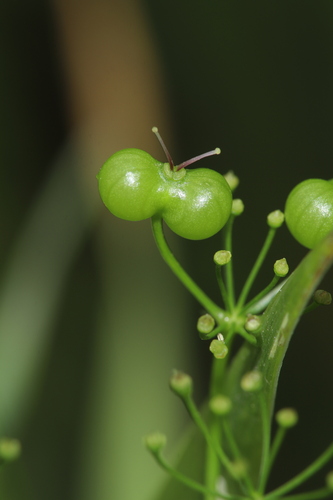
An herb in the Apiaceae family found in temperate regions, with leaves used as a spice.
Wikipedia
Source ↗Bifora radians, the wild bishop, is a species of annual herb in the family Apiaceae. They have a self-supporting growth form and simple, broad leaves. Individuals can grow to 31 cm tall.
Names & Synonyms
Ayran otu, Kisnis, Kokar ot, Kucuk kisnis otu, Yabani kisnis otu
Anidrum radians (M. Bieb.) KuntzeCoriandrum radians (M. Bieb.) Prantl
References (3)
- Dogan, A., et al, 2014, A review of edible plants on the Turkish Apiaceae species. J. Fac. Pharm. Istanbul, 44(2) pp 251-262
- Ertug, F, Yenen Bitkiler. Resimli Türkiye Florası -I- Flora of Turkey - Ethnobotany supplement
- Seidemann J., 2005, World Spice Plants. Economic Usage, Botany, Taxonomy. Springer. p 65