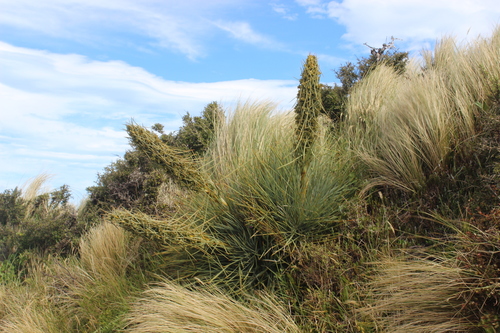
Chaerophyllum aureum
L.
ApiaceaeLeaves

iNaturalist · cc-by-nc
(c) Muriel Bendel, some rights reserved (CC BY-NC), uploaded by Muriel Bendel
(c) Muriel Bendel, some rights reserved (CC BY-NC), uploaded by Muriel Bendel

iNaturalist · cc-by-nc
(c) Natalia Ionina, some rights reserved (CC BY-NC)
(c) Natalia Ionina, some rights reserved (CC BY-NC)
What to Eat
Edible parts: Leaves, Leaf stalk
The leaves, which have a parsley aroma, are occasionally used as flavoring and are pickled. Young stems are eaten after peeling.
Where to Find It
It is a temperate plant.
Andorra, Armenia, Caucasus, Europe, Georgia, Iran, Luxembourg, Middle East, Russia, Switzerland, Turkey, Türkiye,
Countries: Andorra, United Arab Emirates, Albania, Austria, Bosnia & Herzegovina, Belgium, Bulgaria, Bahrain, Belarus, Switzerland, Cyprus, Czechia, Germany, Denmark, Estonia, Spain, Finland, France, United Kingdom, Greece, Croatia, Hungary, Ireland, Israel, Iraq, Iran, Iceland, Italy, Jordan, Kuwait, Lebanon, Liechtenstein, Lithuania, Luxembourg, Latvia, Monaco, Moldova, Montenegro, North Macedonia, Malta, Netherlands, Norway, Oman, Poland, Portugal, Qatar, Romania, Serbia, Russia, Saudi Arabia, Sweden, Slovenia, Slovakia, San Marino, Syria, Turkey, Ukraine, Yemen
How to Identify
A temperate herb in the parsley family (Apiaceae) sold in local markets.
Wikipedia
Source ↗Chaerophyllum aureum is a species of flowering plant belonging to the family Apiaceae. Its native range is Central and Southern Europe, Crimea, Turkey to Iran.
Other Information
It is sold in local markets.
Names & Synonyms
Cominassa, Delimanca, Delimanda, Ghmi, Mandak, Shushanbanjar
Bellia aurata Bubani [Illegitimate]Chaerophyllum hybridum Ten.Chaerophyllum maculatum Willd.Chaerophyllum monogonum Kit. ex LinkChaerophyllum temuloides Boiss.Chaerophyllum trapezuntinum Boiss.Croaspila aurea (L) Raf.Myrrhis aurea All.Myrrhis maculata SweetScandix aurea Roth.Selinum aureum E. H. L. Krause
References (8)
- Bussman, R. W., et al, 2016, A comparative ethnobotany of Khevsureti, Samtskhe-Javakheti, Tusheti, Svaneti, and Racha-Lechkhumi, Republic of Georgia (Sakartvelo), Caucasus. Journal of Ethnobiology and Ethnomedicine (2016) 12:43
- Bussman, R. W., et al, 2021, Unity in diversity—food plants and fungi of Sakartvelo (Republic of Georgia), Caucasus. Journal of Ethnobiology and Ethnomedicine (2021) 17:72 p 5
- Cakir, E. A., 2017, Traditional knowledge of wild edible plants of Iğdır Province (East Anatolia, Turkey). Acta Soc Bot Pol. 2017;86(4):3568.
- Dogan, A., et al, 2014, A review of edible plants on the Turkish Apiaceae species. J. Fac. Pharm. Istanbul, 44(2) pp 251-262
- Ertug, F, Yenen Bitkiler. Resimli Türkiye Florası -I- Flora of Turkey - Ethnobotany supplement
- Kaliszewska, I & Kolodziejska-Degorska, I, 2015, The social context of wild leafy vegetables uses in Shiri, Daghestan. Journal of Ethnobiology and Ethnomedicine, 11:63
- Nanagulyan, S., et al, 2020, Wild plants and fungi sold in the markets of Yerevan (Armenia). Journal of Ethnobiology and Ethnomedicine 16:26
- Seidemann J., 2005, World Spice Plants. Economic Usage, Botany, Taxonomy. Springer. p 94