Curcuma caesia
Roxb.
Black zedoary
(c) jessica, some rights reserved (CC BY-NC), uploaded by jessica

(c) Ashwin A, some rights reserved (CC BY)
What to Eat
Edible parts: Rhizome - spice, Root, Flowers
The fresh rhizome is occasionally used as a spice, and the flowers are also edible.
Where to Find It
It is a tropical plant. In Queen Sirikit BG.
Asia, Bangladesh, India, Northeastern India, SE Asia, Thailand,
How to Identify
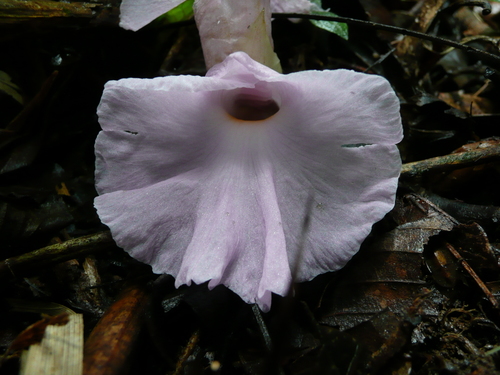
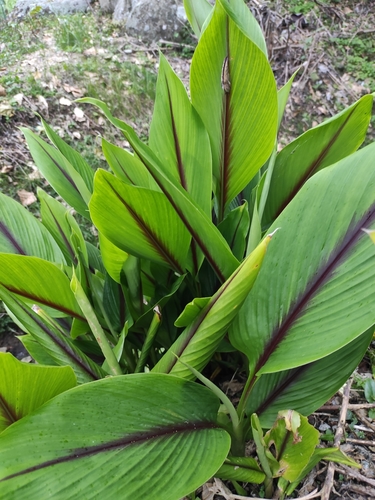
A ginger family herb. It keeps growing from year to year. The rhizome is bluish-black. It grows 2-6 m long. The plant grows 1 m tall. The leaves are in groups of 10-20 and are broadly sword shaped. The flowers are 15-20 cm long in a spike. The flowers develop before the leaves.
How to Grow
Plants can be grown from the rhizome.
Medicinal Uses
The plant is used in traditional medicine.
Wikipedia
Source ↗Curcuma caesia, black turmeric or black zedoary, is a perennial herb with bluish-black rhizomes that is native to northeast India.
Other Information
It is cultivated.
Notes
It is used in medicine.
Names & Synonyms
Chong-ut, Kalacheng, Kala-haldi, Krishna kedar, Nalla pasupi, Yaingang amuba
References (7)
- Arora, R. K., 2014, Diversity in Underutilized Plant Species - An Asia-Pacific Perspective. Bioversity International. p 25
- Borah, R. L., & Sharma, G. C., 2012, Systematic Survey of Zingiberaceae of Dibrugarh District, Assam, India. Indian Journal of Fundamental and Applied Life Science 2(2): pp 365-373
- Mishra, M., 2013, Utilization of wild tuberous plants in extreme environmental condition: A Case of Baiga Tribe of Central India. The Journal of Ethnobiology and Traditional Medicine. Photon 118 (2013) 366-372
- Seidemann J., 2005, World Spice Plants. Economic Usage, Botany, Taxonomy. Springer. p 126
- Teron, R. & Borthakur, S. K., 2016, Edible Medicines: An Exploration of Medicinal Plants in Dietary Practices of Karbi Tribal Population of Assam, Northeast India. In Mondal, N. & Sen, J.(Ed.) Nutrition and Health among tribal populations of India. p 157
- Toppo, P. et al, 2016, Wild edible plants of Dhamtari district of Chhattisgarh, India. Van Sangyan Vol. 3, No. 4
- Zeven, A. C. & de West, J. M. J., 1982, Dictionary of cultivated plants and their regions of diversity. Wageningen. p 80