Malabaila secacul
(Mill.) Boiss.
Sekakul
iNaturalist · cc-by-nc
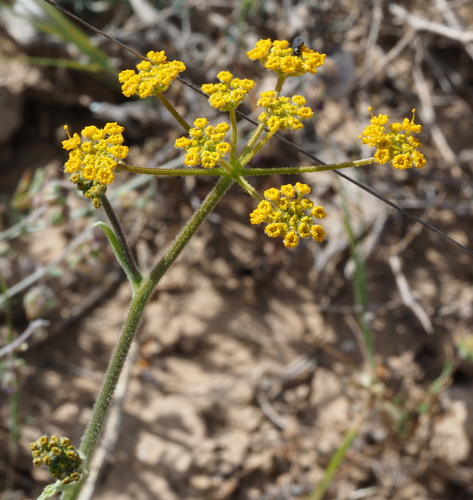
(c) Ron Frumkin, some rights reserved (CC BY-NC)
(c) Ron Frumkin, some rights reserved (CC BY-NC)
iNaturalist · cc-by-nc-sa
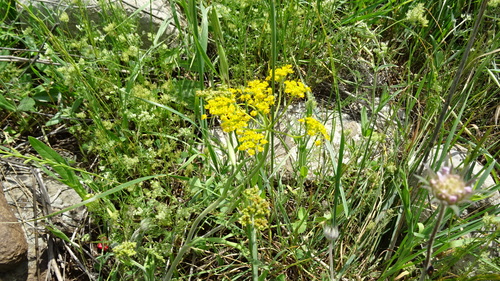
(c) יאיר אור, some rights reserved (CC BY-NC-SA)
(c) יאיר אור, some rights reserved (CC BY-NC-SA)

iNaturalist · cc-by-nc
(c) Stan Nikonov, some rights reserved (CC BY-NC)
(c) Stan Nikonov, some rights reserved (CC BY-NC)
What to Eat
Edible parts: Roots, Leaves, Stems, Caution
The fresh fleshy roots are peeled and eaten raw. The young stems are eaten raw after peeling. The leaves are cooked and eaten. It is used as a spice in cheese.
Known Hazards
Where to Find It
It is a Mediterranean climate plant.
Jordan, Middle East, Syria, Turkey, Türkiye,
How to Identify
A cultivated Mediterranean herb in the Apiaceae family with edible roots, stems, and leaves.
Other Information
It is cultivated.
Names & Synonyms
Caksir, Corduk otu, Cortluk otu, Harik, Jazar, Kelimemesi, Kelemkesir, Kpyunekmegi, Manda
Heracleum marashicum Kit Tan & YildizLeiotulus secacul (Mill.) Pimenov. & Ostr.Pastinaca secacul (Mill.) Sol.Peucedanum secacul Mill.Tordylium secacul Mill.Tordylium sekakul DC.
References (6)
- Al-Qura'n, S. A., 2010, Ethnobotanical and Ecological Studies of Wild Edible Plants in Jordan. Libyan Agriculture Research Center Journal International 1(4):231-243
- Cakir, E. A., 2017, Traditional knowledge of wild edible plants of Iğdır Province (East Anatolia, Turkey). Acta Soc Bot Pol. 2017;86(4):3568.
- Dogan, A., et al, 2014, A review of edible plants on the Turkish Apiaceae species. J. Fac. Pharm. Istanbul, 44(2) pp 251-262
- Ertug, F, Yenen Bitkiler. Resimli Türkiye Florası -I- Flora of Turkey - Ethnobotany supplement
- Kaya, O. M., et al, 2020, An ethnobotanical research in Sanhurfa central district and attached Villages (Turkey). Indian Journal of Traditional Knowledge. Vol. 19(1) pp 7-23
- Zeven, A. C. & de West, J. M. J., 1982, Dictionary of cultivated plants and their regions of diversity. Wageningen. p 101