Cenchrus biflorus
Roxb.
Sandbur grass

(c) Marco Schmidt, some rights reserved (CC BY-NC-SA)
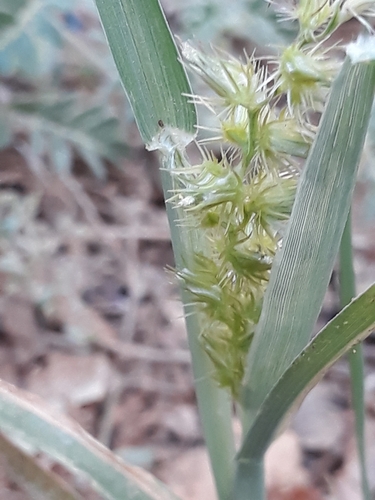
(c) Karim Haddad, some rights reserved (CC BY)
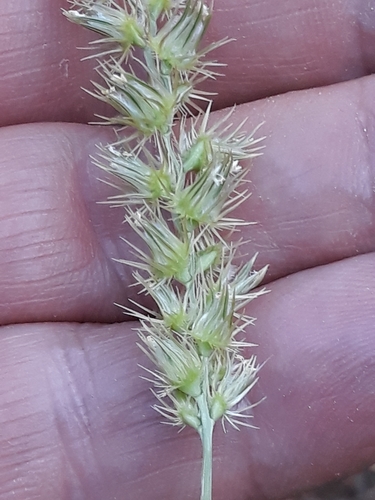
(c) Karim Haddad, some rights reserved (CC BY)
What to Eat
Edible parts: Seeds, Cereal
A traditional food plant in Africa, this little-known grain has potential to improve nutrition, boost food security, foster rural development and support sustainable landcare. It is thus considered a famine food in several desertic areas. Cenchrus biflorus is also a valuable fodder plant for ruminants, particularly at its early stages of development.
Known Hazards
Where to Find It
A tropical plant. It grows on sand dunes and sandy plains. It is collected in the Sahel. It suits areas with 260-650 mm annual rainfall. It cannot tolerate frost. It can grow in salty or alkaline soils. It grows from sea level to 1,300 m above sea level. It can grow in arid places.
Africa, Asia, Algeria, Angola, Arabia, Australia, Benin, Botswana, Burkina Faso, Cameroon, Central Africa, Chad, Congo, East Africa, Egypt, Ethiopia, Gabon, Gambia, Ghana, Guinea, Guinée, Guinea-Bissau, India, Iran, Kenya, Madagascar, Mali, Mauritania, Middle East, Mozambique, Namibia, Niger, Nigeria, North Africa, Pakistan, Sahel, Sahara, Saudi Arabia, Senegal, Somalia, South Africa, Southern Africa, South Sudan, Sudan, Tanzania, USA, West Africa, Yemen, Zambia, Zimbabwe,
How to Identify
An annual grass. It grows 10-60 cm high. It forms tufts. It has runners, The leaves are alternate and simple. They are 2-25 cm long and 2-7 cm wide. The flowers are green. They are in a spike like panicle. This is 2-15 cm long and has 1-3 spikelets.
Nutrition Score: 55/100
| Part | Moisture | kJ | kcal | Protein | Vit A | Vit C | Iron | Zinc |
|---|---|---|---|---|---|---|---|---|
| Seeds | 9.8 | 1547 | 370 | 17.8 | — | — | — | — |
How to Grow
It can be grown from seed. Seed germinate best at 35°C.
Propagation: Seed - sow in situ. The optimum temperature for seed germination is 35°c.
Medicinal Uses
The root is an ingredient of traditional aphrodisiac prescriptions. The fruits (?seed) are diuretic and pectoral.
Other Uses
Because the plant persists until the end of the dry season, it is sown against desertification in India. Its presence is understood by nomadic peoples in Senegal to indicate soil suitable for growing millet and ground-nuts. The hooked bristles of the inflorescence do show one beneficial attribute. Locust hoppers passing through belts of this grass become entangled with the hooks and many die, especially those immediately after ecdysis when their chitinous integument is still soft.
Wikipedia
Source ↗Cenchrus biflorus is a species of annual grass in the family Poaceae. Common names include Indian sandbur, Bhurat or Bhurut in India, Haskaneet in Sudan, Aneeti in the Arabic dialect of Mauritania, Ƙarangiya in the Hausa language of Nigeria, Tòdlɗi in the Karai-karai language and Ngibbi in the Kanuri language of Nigeria. In the francophone countries of the Sahel, it is usually referred to as "cram-cram" .
Production
The seeds fall from the plant and are swept up. They are pounded in a mortar then winnowed in the wind.
Other Information
It is a dietary staple amongst nomads in the Sahel. It is commonly used in Mali.
Notes
There are about 23 Cenchrus species. They are in the tropical to warm temperate regions. Chemical composition (Sudan sample): Sulphur = 0.20% (dry). Potassium = 0.18% - Magnesium = 0.7% (dry). Calcium = 0.07% (dry). Na = 0.01% (dry). K = 0.17% (dry). Zinc = 52 mg/kg-1 (dry). Iron = 71 mg/kg-1 (dry). Manganese = 22 mg/kg-1 (dry). Copper = 5 mg/kg-1 (dry). Aluminium = 124 mg/kg-1 (dry). Fatty acids (saturated): 14:0 = <0.1g/100g-1. 16:0 = 23.8. 18:0 = 4.0. 22:0 = <0.1g/100g-1. 24:0 = <0.1g/100g-1; (monosaturated): 16:1 = 3.0. 18:1 = 30.2. 20.1 = <0.1g/100g-1; (polyunsaturated): 18.2 = 35.7. 18:3 = 1.9.
Names & Synonyms
Ascanit abou choc, Ascanit abu shock, Askanit, Bhurat Bhurat, Bur grass, Cacam, Cram-cram, Dani, Gallon’s Curse, Haskaneet khishin, Haskaneet, Indian sandbur, K'arangiya, Kangamba, Kanyata, Kram kram, Ngibbi, Nogo, Quebe, Spiny cram-cram'
References (37)
- Abbiw, D.K., 1990, Useful Plants of Ghana. West African uses of wild and cultivated plants. Intermediate Technology Publications and the Royal Botanic Gardens, Kew. p 25
- ABDELMUTI,
- Ambasta S.P. (Ed.), 2000, The Useful Plants of India. CSIR India. p 114 (As Cenchrus setigerus) (Also as Cenchrus barbatus)
- Beskr. Guin. pl. 63. 1827 (As Cenchrus barbatus)
- Brink, M., 2006. Cenchrus biflorus Roxb. [Internet] Record from Protabase. Brink, M. & Belay, G. (Editors). PROTA (Plant Resources of Tropical Africa), Wageningen, Netherlands. < http://database.prota.org/search.htm>. Accessed 14 October 2009.
- Burkill, H. M., 1985, The useful plants of west tropical Africa, Vol. 2. Kew.
- Busson, 1965,
- CRÉAC'H. (As Cenchrus catharticus)
- Dalziel, J. M., 1937, The Useful plants of west tropical Africa. Crown Agents for the Colonies London.
- Dobriyal, M. J. R. & Dobriyal, R., 2014, Non Wood Forest Produce an Option for Ethnic Food and Nutritional Security in India. Int. J. of Usuf. Mngt. 15(1):17-37
- Famine foods (Also as Cenchrus catharticus)
- Fl. ind. 1:238. 1820
- Flora of Pakistan. www.eFloras.org
- Fowler, D. G., 2007, Zambian Plants: Their Vernacular Names and Uses. Kew. p 69
- Gallagher, D. E., 2010, Farming beyond the escarpment: Society, Environment, and Mobility in Precolonial Southeastern Burkina Faso. PhD University of Michigan.
- Grivetti, L. E., 1980, Agricultural development: present and potential role of edible wild plants. Part 2: Sub-Saharan Africa, Report to the Department of State Agency for International Development. p 32
- Hall, N. et al, 1972, The Use of Trees and Shrubs in the Dry Country of Australia, AGPS, Canberra. p 50
- Harris, F. M. A. and Mohammed, S., 2003, Relying on Nature: Wild Foods in Northern Nigeria. Ambio Vol. 32 No. 1. p 25-30
- Hussey, B.M.J., Keighery, G.J., Cousens, R.D., Dodd, J., Lloyd, S.G., 1997, Western Weeds. A guide to the weeds of Western Australia. Plant Protection Society of Western Australia. p 46
- Jardin, C., 1970, List of Foods Used In Africa, FAO Nutrition Information Document Series No 2.p 1
- Kenneally, K.E., Edinger, D. C., and Willing T., 1996, Broome and Beyond, Plants and People of the Dampier Peninsula, Kimberley, Western Australia. Department of Conservation and Land Management. p 216
- Lazarides, M. & Hince, B., 1993, Handbook of Economic Plants of Australia, CSIRO. p 53
- MORTIMORE,
- National Research Council, 1996, Lost crops of Africa. Volume 1 grains, p 258
- NOUR & HARPER,
- Paczkowska, G. & Chapman, A.R., 2000, The Western Australian Flora. A Descriptive Catalogue. Western Australian Herbarium. p 99
- Pedersen J. and Benjaminsen, T. A., 2008, One Leg or Two? Food Security and Pastoralism in the Northern Sahel. Human Ecology 36:43-57
- Peters, C. R., O'Brien, E. M., and Drummond, R.B., 1992, Edible Wild plants of Sub-saharan Africa. Kew. p 20
- Roger, D. D., et al, 2012, Nutritional properties of “Bush Meals” from North Cameroon’s Biodiversity. Advances in Applied Science Research, 2012, 3 (3):1482-1493
- Royal Botanic Gardens, Kew (1999). Survey of Economic Plants for Arid and Semi-Arid Lands (SEPASAL) database. Published on the Internet; http://www.rbgkew.org.uk/ceb/sepasal/internet [Accessed 8th May 2011]
- SAXENA;
- SALIH,
- SHANKARNARAYAN & SAXENA.
- Singh, H.B., Arora R.K.,1978, Wild edible Plants of India. Indian Council of Agricultural Research, New Delhi. p 84
- Vanderjagt, F. J., et al, 2000, The trypsin inhibitor content of 61 wild edible plant foods of Niger. Plant Foods for Human Nutrition 55: 335–346, 2000.
- Wheeler, J.R.(ed.), 1992, Flora of the Kimberley Region. CALM, Western Australian Herbarium, p 1135
- World Checklist of Useful Plant Species 2020. Royal Botanic Gardens, Kew


