Cenchrus longispinus
(Hack.) Fernald
Longspine Sandbur, Spiny burrgrass

(c) Aleksandr Popov / Александр Попов, some rights reserved (CC BY-NC), uploaded by Aleksandr Popov / Александр Попов
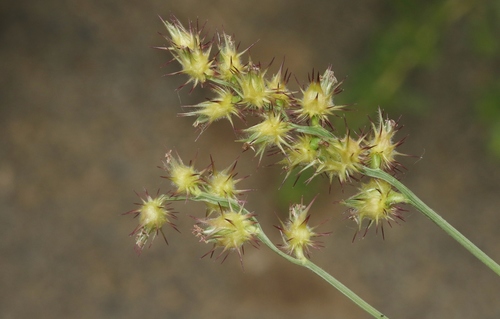
(c) James Bailey, some rights reserved (CC BY-NC), uploaded by James Bailey
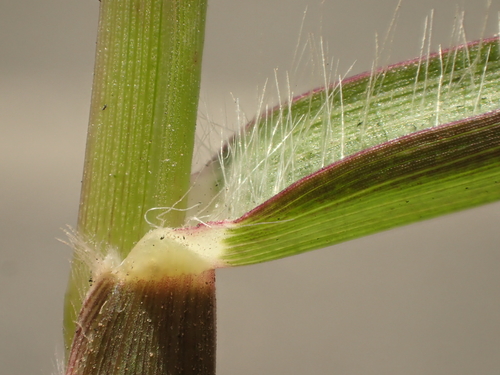
(c) Ron Vanderhoff, some rights reserved (CC BY-NC), uploaded by Ron Vanderhoff
What to Eat
Edible parts: Seeds, Cereal
The seeds are eaten as cereal.
Where to Find It
It grows on grey sand. It grows in warm temperate places.
Argentina, Australia, North America, South America, USA,
How to Identify
A grass that lies over. It keeps growing from year to year. It grows 80 cm high. The flowers are green. It produces a spiny burr. The spikelets are 5.8-7.2 mm long and have 40-70 spines on the burr. The spines are 7 mm long.
Wikipedia
Source ↗Cenchrus longispinus is a species of grass, also known as spiny burr grass or gentle Annie or picco. Its fruits are clumped into "burrs" with sharp, barbed spines that can penetrate the hides and mouth of grazing animals. They can also become lodged in human clothing and skin, causing some discomfort. This activity is important for the plant's seed dispersal, as the plant is a summer annual. The species has a prostrate habit when there is no competition for light. The species is native to North America and is considered as a noxious weed in Europe, Australia and New Zealand where it was introduced.
Notes
There are about 23 Cenchrus species.
References (6)
- Duke, J.A., 1992, Handbook of Edible Weeds. CRC Press. p 66
- Hussey, B.M.J., Keighery, G.J., Cousens, R.D., Dodd, J., Lloyd, S.G., 1997, Western Weeds. A guide to the weeds of Western Australia. Plant Protection Society of Western Australia. p 48
- Lamp, C.A., Forbes, S.J. and Cade, J.W., 1990, Grasses of Temperate Australia. Inkata Press. p 106
- Lazarides, M. & Hince, B., 1993, Handbook of Economic Plants of Australia, CSIRO. p 53
- Paczkowska, G. & Chapman, A.R., 2000, The Western Australian Flora. A Descriptive Catalogue. Western Australian Herbarium. p 99
- Rhodora 45:388. 1943


