Cenchrus setigerus
(Stend.) Vahl
Birdwood grass
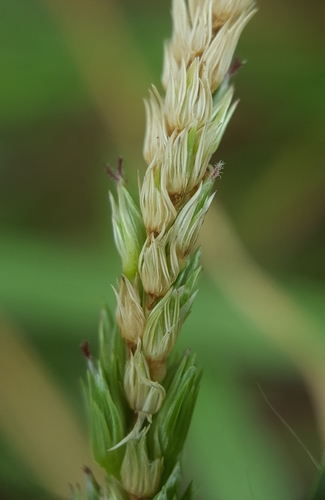
(c) François Rousseu, some rights reserved (CC BY-NC), uploaded by François Rousseu

(c) Kevin Faccenda, some rights reserved (CC BY)
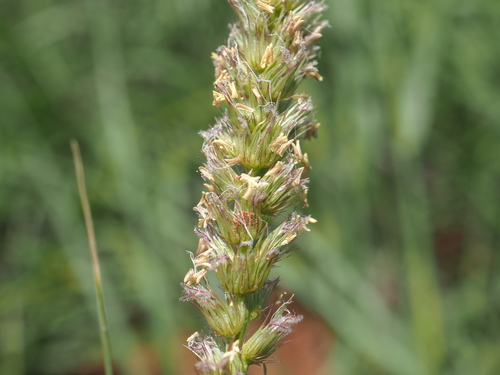
(c) Hugo Innes, some rights reserved (CC BY)
What to Eat
Edible parts: Seeds, Cereal
The seeds are eaten raw or mixed with millet for bread, and the plant serves as a famine food.
Where to Find It
A tropical plant. It grows on alluvial soils and gravels. It suits sandy and light textured soils. It responds quickly to light rains. It grows in tropical and temperate places. It grows in areas with an annual rainfall between 125-1,250 mm. It grows from sea level to 1,100 m above sea level. It can grow in arid places. In Yunnan.
Africa, Arabia, Asia, Australia, Brazil, Britain, China, Djibouti, East Africa, Egypt, Ethiopia, Europe, Ghana, India, Iran, Iraq, Kenya, Kuwait, Oman, Middle East, Mozambique, Myanmar, Nigeria, North Africa, Pakistan, Qatar, Saudi Arabia, SE Asia, Socotra, Somalia, South Africa, Sudan, Tanzania, Uganda, United Arab Emirates, UAE, West Africa, Yemen,
How to Identify
A wiry tussocky grass. It keeps growing from year to year. It has a short rhizome. It has a bulbous base. The stems can be 1.5 m high. The leaf sheaths are loose. The ligule is short and has a fringe of dense hairs. The leaf blade in long and narrow. It can be folded or flat. The flowering stalk is a dense cylinder shaped panicle. It is purple when mature. It is 5-9 cm long and has zigzag stems. The seeds can be light green are dark purple.
Other Information
It is a famine food.
Notes
There are about 23 Cenchrus species.
Names & Synonyms
Kata -dhaman, Motha dhaman
References (12)
- Burkill, H. M., 1985, The useful plants of west tropical Africa, Vol. 2. Kew.
- Famine foods
- GUPTA & KANODIA,
- Hussey, B.M.J., Keighery, G.J., Cousens, R.D., Dodd, J., Lloyd, S.G., 1997, Western Weeds. A guide to the weeds of Western Australia. Plant Protection Society of Western Australia. p 48
- Kenneally, K.E., Edinger, D. C., and Willing T., 1996, Broome and Beyond, Plants and People of the Dampier Peninsula, Kimberley, Western Australia. Department of Conservation and Land Management. p 216
- Lazarides, M. & Hince, B., 1993, Handbook of Economic Plants of Australia, CSIRO. p 53
- Paczkowska, G. & Chapman, A.R., 2000, The Western Australian Flora. A Descriptive Catalogue. Western Australian Herbarium. p 99
- Petheram, R.J. and Kok, B., 2003, Plants of the Kimberley Region of Western Australia. UWA Press p 81
- Royal Botanic Gardens, Kew (1999). Survey of Economic Plants for Arid and Semi-Arid Lands (SEPASAL) database. Published on the Internet; http://www.rbgkew.org.uk/ceb/sepasal/internet [Accessed 8th May 2011]
- SAXENA,
- SHANKARNARAYAN & SAXENA,
- World Checklist of Useful Plant Species 2020. Royal Botanic Gardens, Kew (As Cenchrus setiger)


