Picrasma javanica
Blume
Bitterwood tree

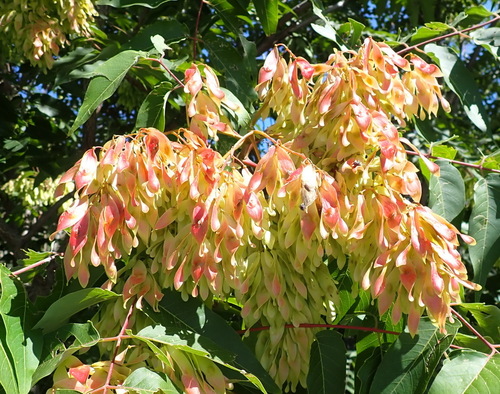
(c) Woraphot Bunkhwamdi, some rights reserved (CC BY-NC), uploaded by Woraphot Bunkhwamdi

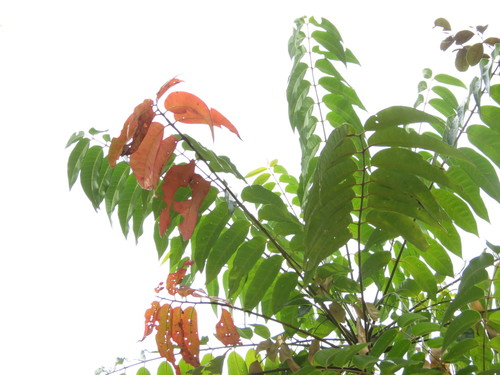
(c) Arief Hamidi, some rights reserved (CC BY-NC)
What to Eat
Edible parts: Leaves, Vegetable
The leaves are cooked and eaten as a vegetable.
Where to Find It
It is a tropical plant. It grows in the rainforest up to 1,500 m above sea level. In Yunnan.
Asia, China, India, Indonesia, Myanmar, New Guinea, Northeastern India, SE Asia, Thailand,
How to Identify
A tree. It grows 24 m tall. The trunk is 35 cm across. The bark is smooth and brittle. The leave are compound with 5-7 leaflets. The leaflets are 4-20 cm long by 1-10 cm wide. They are wedge shaped at the base and taper to the tip. The flowers are in compound groups in the axils of leaves. These are 20 cm long and male and female flowers are separate. Female flowers are twice as long as the male. The flowers are white to yellow. The fruiting body has 1-4 fruit. These are fleshy and oval or a flattened round shape. They are 9-10 mm long by 7-12 mm wide.
How to Grow
Plants can be grown from seeds.
Wikipedia
Source ↗Picrasma javanica is a tree in the family Simaroubaceae. The specific epithet javanica is from the Latin meaning "of Java".
Notes
It is an unresolved name in The Plant List.
Names & Synonyms
Pohon kayu pahit, Taing-kamaka
References (2)
- Sukarya, D. G., (Ed.) 2013, 3,500 Plant Species of the Botanic Gardens of Indonesia. LIPI p 446
- Xu, You-Kai, et al, 2004, Wild Vegetable Resources and Market Survey in Xishuangbanna, Southwest China. Economic Botany. 58(4): 647-667.