Cissus kerrii
Craib
VitaceaeLeaves
iNaturalist · cc0
no rights reserved, uploaded by 葉子
no rights reserved, uploaded by 葉子
iNaturalist · cc0
no rights reserved, uploaded by 葉子
no rights reserved, uploaded by 葉子
iNaturalist · cc-by
(c) Jacy Chen, some rights reserved (CC BY), uploaded by Jacy Chen
(c) Jacy Chen, some rights reserved (CC BY), uploaded by Jacy Chen
What to Eat
Edible parts: Leaves, Vegetable
The leaves are cooked and eaten as a vegetable.
Where to Find It
It is a tropical plant. It grows on trees or shrubs between 100-200 m above sea level in southern China. In Yunnan.
Asia, Australia, China, India, Indochina, Indonesia, SE Asia, Taiwan, Thailand, Vietnam,
Countries: United Arab Emirates, Afghanistan, Armenia, Australia, Azerbaijan, Bangladesh, Bahrain, Brunei, Bhutan, China, Georgia, Indonesia, Israel, India, Iraq, Iran, Jordan, Japan, Kyrgyzstan, Cambodia, North Korea, South Korea, Kuwait, Kazakhstan, Laos, Lebanon, Sri Lanka, Myanmar, Mongolia, Maldives, Malaysia, Nepal, Oman, Philippines, Pakistan, Qatar, Saudi Arabia, Singapore, Syria, Thailand, Tajikistan, Timor-Leste, Turkmenistan, Turkey, Taiwan, Uzbekistan, Vietnam, Yemen
How to Identify
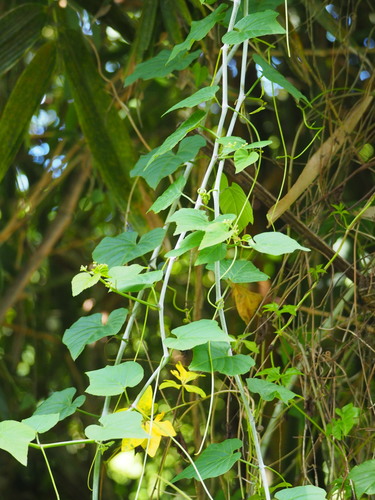
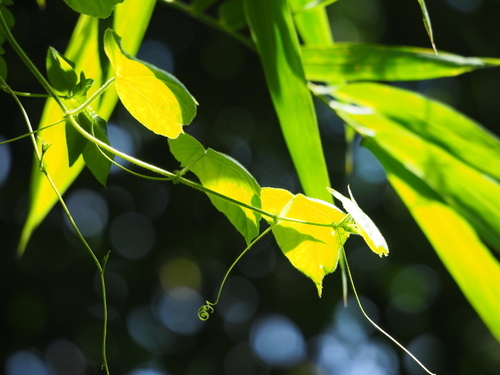
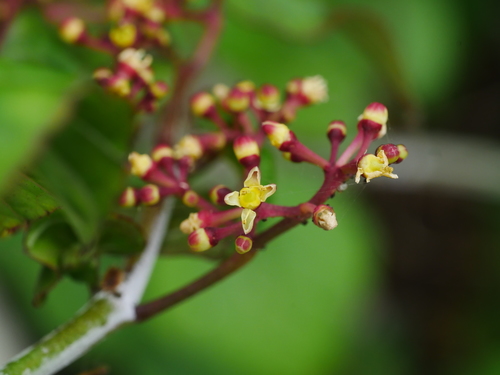
A vine. The branches have 4 ridges along them. The tendrils are not branched. The leaves are simple and 5-11 cm long by 4-8 cm wide. The flowers are in a flat topped group. The fruit are 1 cm across and have one seed.
Other Information
It is a cultivated food plant.
Names & Synonyms
Nengyounengya
Cissus modeccoides var. kerrii CraibCissus modeccoides var. subintegra Gagnep.
References (1)
- Xu, You-Kai, et al, 2004, Wild Vegetable Resources and Market Survey in Xishuangbanna, Southwest China. Economic Botany. 58(4): 647-667.


