Zingiber corallinum
Hance
ZingiberaceaeLeaves

iNaturalist · cc-by-nc
(c) priya_2696, some rights reserved (CC BY-NC)
(c) priya_2696, some rights reserved (CC BY-NC)

iNaturalist · cc-by-nc
(c) priya_2696, some rights reserved (CC BY-NC)
(c) priya_2696, some rights reserved (CC BY-NC)
What to Eat
Edible parts: Leaves, Vegetable
The leaves are cooked as a vegetable and sold in local markets.
Where to Find It
It is a tropical plant. It grows in dense forests in southern China. In Yunnan.
Asia, China, Indochina, SE Asia, Thailand,
Countries: United Arab Emirates, Afghanistan, Armenia, Azerbaijan, Bangladesh, Bahrain, Brunei, Bhutan, China, Georgia, Indonesia, Israel, India, Iraq, Iran, Jordan, Japan, Kyrgyzstan, Cambodia, North Korea, South Korea, Kuwait, Kazakhstan, Laos, Lebanon, Sri Lanka, Myanmar, Mongolia, Maldives, Malaysia, Nepal, Oman, Philippines, Pakistan, Qatar, Saudi Arabia, Singapore, Syria, Thailand, Tajikistan, Timor-Leste, Turkmenistan, Turkey, Taiwan, Uzbekistan, Vietnam, Yemen
How to Identify
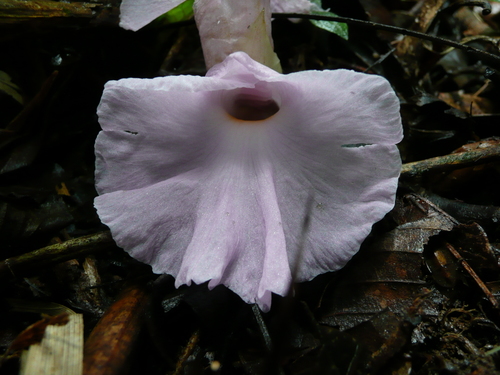
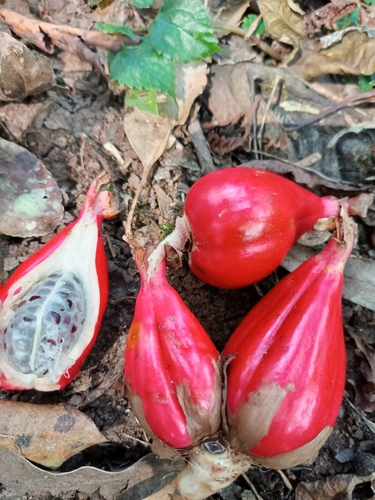
A ginger family herb. The false stems are 1 m tall. The leaves do not have leaf stalks. The leaves are oblong to sword shaped and 20-30 cm long by 4-6 cm wide. There are a few hairs underneath. The flowering shoot comes from the rhizome. It is oblong and 15-30 cm long. The flower lobes on the tube have a purple stripe.
Other Information
Leaves are sold in local markets. It is a cultivated plant.
Names & Synonyms
Guoha
References (1)
- Xu, You-Kai, et al, 2004, Wild Vegetable Resources and Market Survey in Xishuangbanna, Southwest China. Economic Botany. 58(4): 647-667.