Zingiber orbiculatum
S. Q. Tong
ZingiberaceaeLeaves
iNaturalist · cc-by-nc
(c) 丁洪波, some rights reserved (CC BY-NC), uploaded by 丁洪波
(c) 丁洪波, some rights reserved (CC BY-NC), uploaded by 丁洪波
What to Eat
Edible parts: Leaves, Vegetable
The leaves are cooked and eaten as a vegetable, and are sold in local markets.
Where to Find It
It is a tropical plant. It grows in forests at about 600 m above sea level in southern China. In Yunnan.
Asia, China,
Countries: United Arab Emirates, Afghanistan, Armenia, Azerbaijan, Bangladesh, Bahrain, Brunei, Bhutan, China, Georgia, Indonesia, Israel, India, Iraq, Iran, Jordan, Japan, Kyrgyzstan, Cambodia, North Korea, South Korea, Kuwait, Kazakhstan, Laos, Lebanon, Sri Lanka, Myanmar, Mongolia, Maldives, Malaysia, Nepal, Oman, Philippines, Pakistan, Qatar, Saudi Arabia, Singapore, Syria, Thailand, Tajikistan, Timor-Leste, Turkmenistan, Turkey, Taiwan, Uzbekistan, Vietnam, Yemen
How to Identify
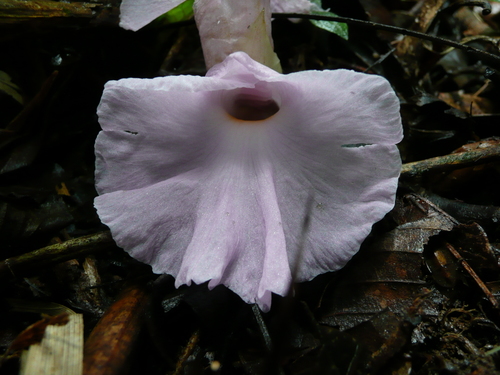
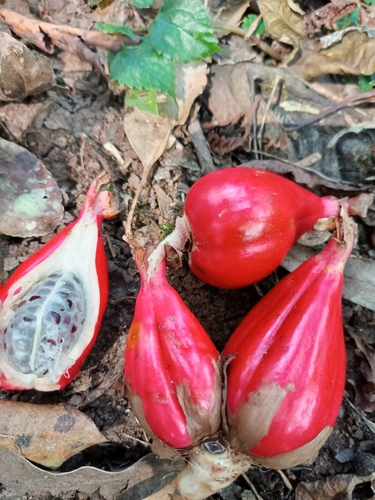
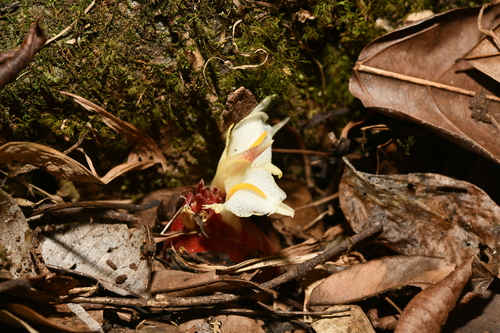
A ginger herb. The false stem is about 2-3 m tall. The leaves are narrowly oval and 45-60 cm long by 7-9 cm wide. There are red dots at the sides. The flowering shoot arises from the rhizome. It is oval and 5-8 cm long by 4-5 cm wide. The flowers are white with red tips.
Other Information
It is a cultivated plant. Leaves are sold in local markets.
Names & Synonyms
Ge bo bu, Nuo eng, Suo ya mi jie, Zhonggu
References (2)
- Cao, Y., et al, 2020, Ethnobotanical study on wild edible plants used by three trans-boundary ethnic groups in Jiangcheng County, Pu’er, Southwest China. Journal of Ethnobiology and Ethnomedicine (2020) 16:66
- Xu, You-Kai, et al, 2004, Wild Vegetable Resources and Market Survey in Xishuangbanna, Southwest China. Economic Botany. 58(4): 647-667.