Zingiber roseum
(Roxb.) Roscoe
Indian ginger

no rights reserved, uploaded by S.MORE

(c) Madhushri Mudke, some rights reserved (CC BY-NC)
What to Eat
Edible parts: Leaves, Vegetable
Leaves are cooked and eaten as a vegetable.
Where to Find It
It is a tropical plant. It grows in moist places in forests at about 900 m above sea level in southern China. In Yunnan.
Asia, Bangladesh, China, India, Indochina, Indonesia, Myanmar, SE Asia, Thailand,
How to Identify
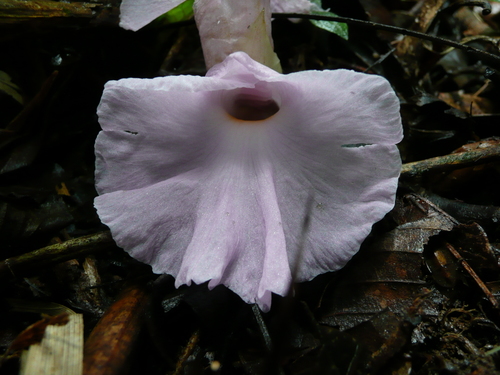
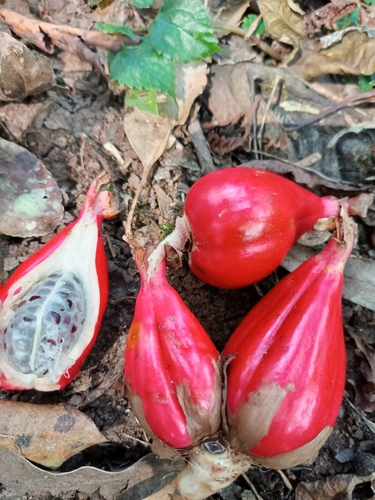
A ginger herb. The false stems are about 1.5 m tall. The leaves do not have leaf stalks. The leaves are oblong and 30 cm long by 3-5 cm wide. They are hairy underneath. The flowering shoots arises from the rhizome. It is oval and 6 cm long. The bracts are red and the flowers are white and red.
How to Grow
Plants can be grown by division of the rhizome.
Medicinal Uses
Leaves are used as a traditional vegetable preparation.
Other Information
It is a cultivated plant. Leaves are sold in local markets.
Names & Synonyms
Jahe india, Wangfei
References (2)
- Sukarya, D. G., (Ed.) 2013, 3,500 Plant Species of the Botanic Gardens of Indonesia. LIPI p 1145
- Xu, You-Kai, et al, 2004, Wild Vegetable Resources and Market Survey in Xishuangbanna, Southwest China. Economic Botany. 58(4): 647-667.