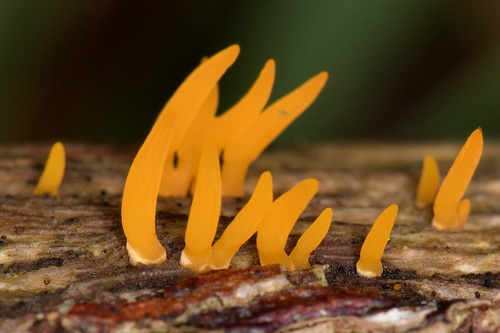
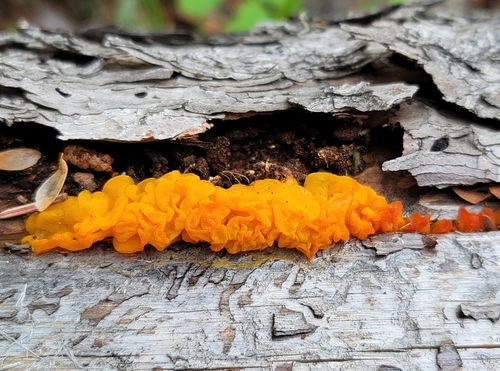
Calocera viscosa
(Pers.)

iNaturalist · cc-by-sa
(c) Didier, some rights reserved (CC BY-SA)
(c) Didier, some rights reserved (CC BY-SA)
iNaturalist · cc-by-nc
(c) Ausra Zilinskiene, some rights reserved (CC BY-NC)
(c) Ausra Zilinskiene, some rights reserved (CC BY-NC)

iNaturalist · cc-by-nc
(c) nofutureinendlessdreaming, some rights reserved (CC BY-NC)
(c) nofutureinendlessdreaming, some rights reserved (CC BY-NC)
What to Eat
Edible parts: Mushroom, Fungus, Caution
Known Hazards
Where to Find It
It is a temperate plant.
Asia, Bhutan, China, Himalayas, Hong Kong,
Countries: United Arab Emirates, Afghanistan, Armenia, Azerbaijan, Bangladesh, Bahrain, Brunei, Bhutan, China, Georgia, Indonesia, Israel, India, Iraq, Iran, Jordan, Japan, Kyrgyzstan, Cambodia, North Korea, South Korea, Kuwait, Kazakhstan, Laos, Lebanon, Sri Lanka, Myanmar, Mongolia, Maldives, Malaysia, Nepal, Oman, Philippines, Pakistan, Qatar, Saudi Arabia, Singapore, Syria, Thailand, Tajikistan, Timor-Leste, Turkmenistan, Turkey, Taiwan, Uzbekistan, Vietnam, Yemen
How to Identify
A temperate mushroom in the family Dacrymycetaceae.
Wikipedia
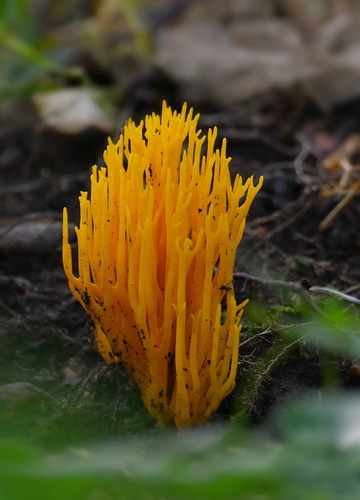
Source ↗Calocera viscosa is a species of fungus in the family Dacrymycetaceae. In the United Kingdom, it has the recommended English name of yellow stagshorn. In North America it is variously called coral jelly fungus, jelly staghorn, yellow false coral, yellow tuning fork, and jelly antler. The basidiocarps (fruit bodies) are small, gelatinous, bright golden yellow, and branched. Calocera viscosa grows on logs and dead wood of conifers. It is a common species throughout Europe and has also been recorded from North America, Asia, and Australia.
Other Information
It is not attractive as a food.
References (1)
- Boa, E. R., 2004, Wild edible fungi and their importance to people. FAO Non Wood Forest Products Booklet 17