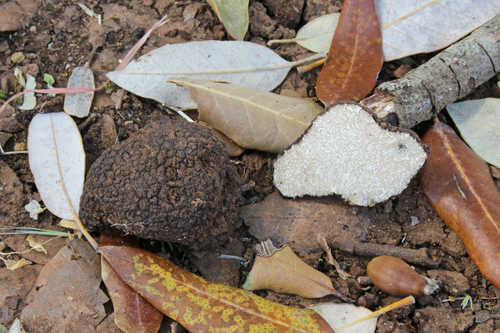
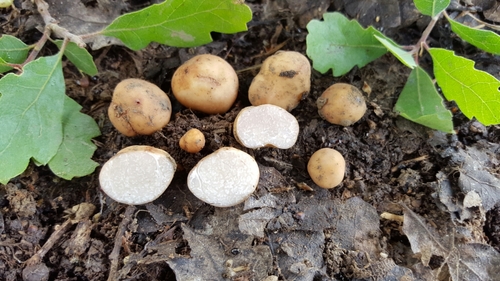
Tuber rufum
Pico
Cinnamon truffle

(c) Jerry Cooper, some rights reserved (CC BY), uploaded by Jerry Cooper

(c) Jerry Cooper, some rights reserved (CC BY)
What to Eat
Edible parts: Mushroom, Fungus
While Tuber rufum is not traditionally known to be commercially harvested and sold for consumption, it is still edible and consumed by some truffle hunters. Unlike other species of truffle, T. rufum is not utilized to produce truffle products such as truffle oil, truffle butter, truffle caviar, truffle salt, or truffle sauce. According to those that have consumed T. rufum, its taste has been reported to be similar to cooked goat meat.
Where to Find It
It is a temperate plant.
Asia, China, India, North America, USA,
How to Identify
A mushroom.
Wikipedia
Source ↗Tuber rufum, also known as the red truffle, is an ectomycorrhizal fungus widely distributed across Europe and found in association with many species of broadleaf and coniferous trees and commonly encountered as an accidental contaminant in commercial truffle-infected plants in areas with neutral to high pH soils. Tuber rufum may be commonly encountered in commercial truffle growing operations or while foraging, however, it is culinary unpopular with no commercial value.
Names & Synonyms
Zonghong kuaijun
References (2)
- Boa, E. R., 2004, Wild edible fungi and their importance to people. FAO Non Wood Forest Products Booklet 17
- Hall, I. R., et al, 2003, Edible and Poisonous Mushrooms of the World. Timber Press. p 317
More from Eutuberaceae