Cymatoderma elegans subsp. infundibuliforme
Jungh, Boid
PolyporaceaeMushrooms
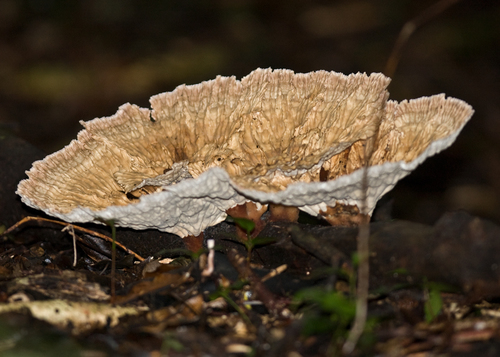
iNaturalist · cc-by-sa
(c) Wikimedia Commons, some rights reserved (CC BY-SA)
(c) Wikimedia Commons, some rights reserved (CC BY-SA)
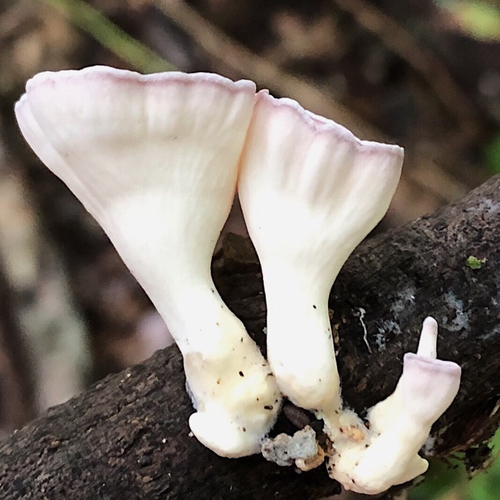
iNaturalist · cc-by-nc
(c) Annie Jamison Demarbre, some rights reserved (CC BY-NC), uploaded by Annie Jamison Demarbre
(c) Annie Jamison Demarbre, some rights reserved (CC BY-NC), uploaded by Annie Jamison Demarbre
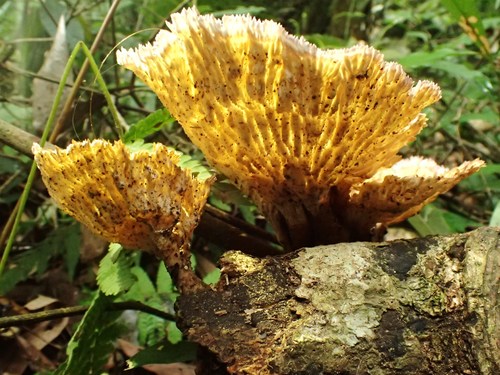
iNaturalist · cc-by-nc
(c) bernice, some rights reserved (CC BY-NC), uploaded by bernice
(c) bernice, some rights reserved (CC BY-NC), uploaded by bernice
What to Eat
Edible parts: Mushroom, Fungus
The mushroom fruiting body is eaten.
Where to Find It
It is a tropical plant. It can grow in Miombo woodland.
Africa, Central Africa, Congo DR,
Countries: Angola, Burkina Faso, Burundi, Benin, Botswana, Congo (DRC), Central African Republic, Congo (Republic), Cote d'Ivoire, Cameroon, Cape Verde, Djibouti, Algeria, Egypt, Eritrea, Ethiopia, Gabon, Ghana, Gambia, Guinea, Equatorial Guinea, Guinea-Bissau, Kenya, Comoros, Liberia, Lesotho, Libya, Morocco, Madagascar, Mali, Mauritania, Mauritius, Malawi, Mozambique, Namibia, Niger, Nigeria, Rwanda, Seychelles, Sudan, Sierra Leone, Senegal, Somalia, South Sudan, Sao Tome & Principe, Eswatini, Chad, Togo, Tunisia, Tanzania, Uganda, South Africa, Zambia, Zimbabwe
How to Identify
A tropical mushroom in the Polyporaceae family, found in Miombo woodland of tropical regions.
Wikipedia
Source ↗Cymatoderma elegans is a fungus species in the genus Cymatoderma. The type specimen was found on at 4,000 m (13,000 ft) on Mount Panggerangi, on Java Island, Indonesia. Name brought to synonymy Cymatoderma elegans subsp. infundibuliforme (Klotzsch) Boidin 1960, a synonym of Cymatoderma infundibuliforme
Names & Synonyms
Kondjata
References (2)
- Boa, E. R., 2004, Wild edible fungi and their importance to people. FAO Non Wood Forest Products Booklet 17
- Degreef, J., et al, 1997, Edible Mushrooms of the Zambezian woodland area. A nutritional and ecological approach. Biotechnol. Agron. Soc. Envir. 1(3): 221-231


