Cantharellus odoratus
(Schwein.) Fr.
CantharellaceaeMushrooms

iNaturalist · cc-by-nc
(c) Ron Pastorino, some rights reserved (CC BY-NC)
(c) Ron Pastorino, some rights reserved (CC BY-NC)
iNaturalist · cc-by-nc
(c) annieliveoak, some rights reserved (CC BY-NC)
(c) annieliveoak, some rights reserved (CC BY-NC)
iNaturalist · cc-by-nc
(c) annieliveoak, some rights reserved (CC BY-NC)
(c) annieliveoak, some rights reserved (CC BY-NC)
What to Eat
Edible parts: Mushroom, Fungus
The mushroom fruiting body is eaten.
Dangerous Lookalikes
This plant can be confused with the following toxic species. Always verify identification carefully before consuming any wild plant.
VERY TOXIC

Jack-O'-Lantern Mushroom
Omphalotus olearius
SAFE
Cantharellus odoratus
Cantharellus odoratus


Jack-O'-Lantern Mushroom: True knife-like gills, grows in clusters on wood/stumps, glows in the dark, orange throughout.
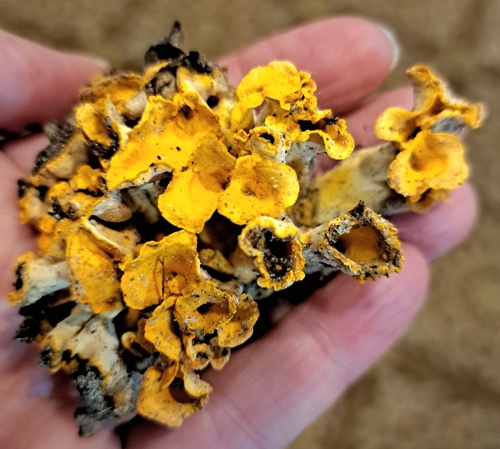
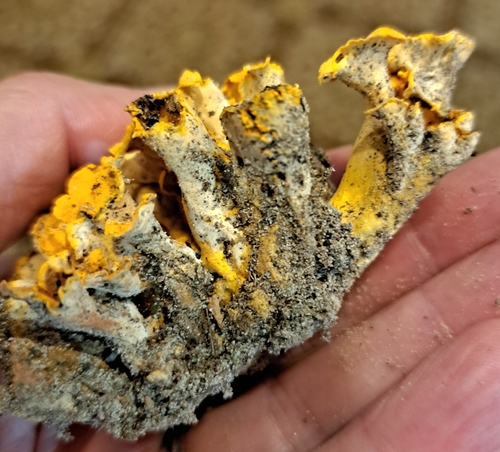
Cantharellus odoratus: Blunt forked ridges (not true gills), grows singly from soil, apricot/fruity smell, solid flesh.
Where to Find It
It is a tropical plant.
How to Identify
A fungal mushroom in the family Cantharellaceae found in tropical regions across Asia, Central America, the Himalayas, Mexico, and North America.
References (2)
- Adhikari, M. K., 2014, Addition and correction to the knowledge on edibility of wild mushrooms in Nepal: a discussion. Bul. Dept. Pl. Res. N. 36, Nepal p 4
- Boa, E. R., 2004, Wild edible fungi and their importance to people. FAO Non Wood Forest Products Booklet 17


