Marasmius crinis-equi
F. Muell. ex Kalchbr.
MarasmiaceaeMushrooms
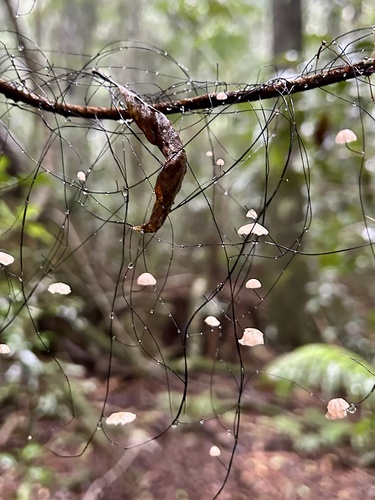
iNaturalist · cc-by-nc
(c) lojo71, some rights reserved (CC BY-NC)
(c) lojo71, some rights reserved (CC BY-NC)
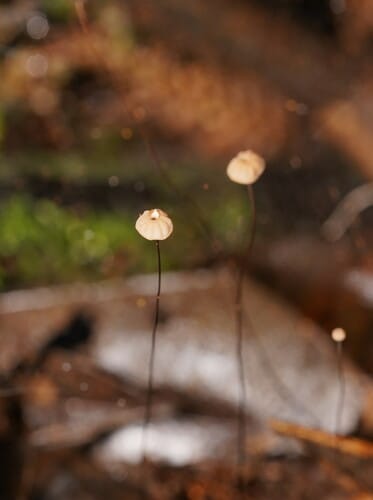
iNaturalist · cc-by-nc-sa
(c) Reiner Richter, some rights reserved (CC BY-NC-SA)
(c) Reiner Richter, some rights reserved (CC BY-NC-SA)
What to Eat
Edible parts: Mushroom, Fungus
Where to Find It
It is a subtropical plant.
Asia, China, Hong Kong,
Countries: United Arab Emirates, Afghanistan, Armenia, Azerbaijan, Bangladesh, Bahrain, Brunei, Bhutan, China, Georgia, Indonesia, Israel, India, Iraq, Iran, Jordan, Japan, Kyrgyzstan, Cambodia, North Korea, South Korea, Kuwait, Kazakhstan, Laos, Lebanon, Sri Lanka, Myanmar, Mongolia, Maldives, Malaysia, Nepal, Oman, Philippines, Pakistan, Qatar, Saudi Arabia, Singapore, Syria, Thailand, Tajikistan, Timor-Leste, Turkmenistan, Turkey, Taiwan, Uzbekistan, Vietnam, Yemen
How to Identify
A mushroom in the Marasmiaceae family found in subtropical regions.
Wikipedia
Source ↗Marasmius crinis-equi is a plant pathogen. It is commonly known as the 'horse hair fungus', and appears on rainforest leaves as a wiry stipe with a delicate fruitbody. The cap of the fruitbody can be up to 4 mm in diameter, and is pale brown.
References (1)
- Boa, E. R., 2004, Wild edible fungi and their importance to people. FAO Non Wood Forest Products Booklet 17

