Geastrum triplex
Jungh.
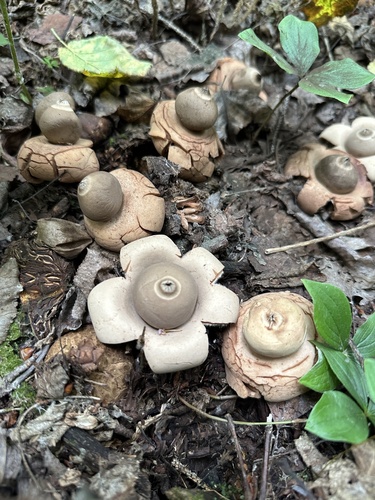
(c) crocusandpine, some rights reserved (CC BY-NC)
What to Eat
Edible parts: Mushroom, Fungus
The mushroom fungus is eaten.
Where to Find It
It is a tropical plant.
Asia, Cambodia, India, Mexico, North America, SE Asia,
How to Identify
Geastrum triplex is a tropical mushroom fungus in the family Geastraceae.
Medicinal Uses
Earthstars were used medicinally by the indigenous peoples of the Americas. The Blackfoot called them ka-ka-toos, meaning "fallen stars", and according to legend, they were an indication of supernatural events. The Cherokee put fruit bodies on the navels of babies after childbirth until the withered umbilical cord fell off, "both as a prophylactic and a therapeutic measure". In traditional Chinese medicine, G. triplex is used to reduce inflammation in the respiratory tract, and to stanch bleeding and reduce swelling.
Wikipedia
Source ↗Geastrum triplex is a species of fungus commonly known as the collared earthstar, the saucered earthstar, or the triple earthstar—and less commonly by the alternative species name Geastrum indicum. It is the largest member of the genus Geastrum (or earthstar fungi) and expanded mature specimens can reach up to 11.5 centimeters (4+1⁄2 in) across. Immature fruit bodies are spherical—somewhat resembling puffballs with pointed beaks—and are partially or completely buried in the ground. As the fungus matures, the outer layer of tissue (the exoperidium) splits into four to eight pointed segments that spread outwards and downwards, lifting and exposing the spherical inner spore sac. The spore sac contains the gleba, a mass of spores and fertile mycelial tissue that when young is white and firm, but ages to become brown and powdery. Often, a layer of the exoperidium splits around the perimeter of the spore sac so that it appears to rest in a collar or saucer. Atop the spore sac is a small pointed beak, the peristome, which has a small hole from which spores may be released. Found in the detritus and leaf litter of hardwood forests, the species is widespread and can be found in Eurasia, Australasia, and the Americas. It is used in the traditional medicines of native North America and China. Fruit bodies have been analyzed chemically to determine their lipid content, and various chemical derivatives of the fungal sterol ergosterol have been identified.
Names & Synonyms
Phset phock
References (2)
- Boa, E. R., Wild edible fungi and their importance to people. FAO Non Wood Forest Products Booklet 17
- Cengel, D. J. & Dany. C., (Eds), 2016, Integrating Forest Biodiversity Resource Management and Sustainable Community Livelihood Development in the Preah Vihear Protected Forest. International Tropical Timber Organization p 109

