Berberis amoena
Dunn
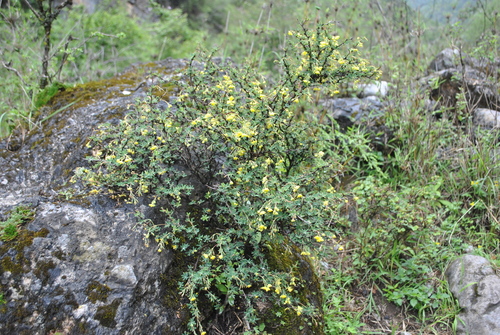
(c) ed_shaw, some rights reserved (CC BY-NC)
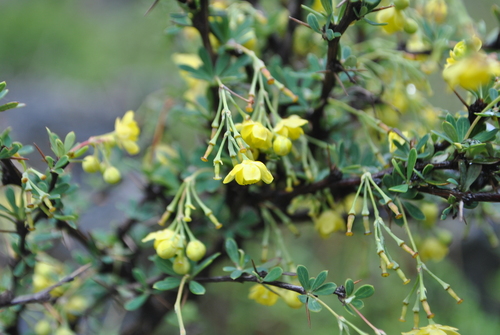
(c) ed_shaw, some rights reserved (CC BY-NC)
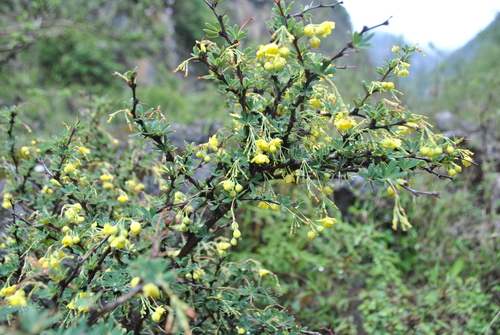
(c) ed_shaw, some rights reserved (CC BY-NC)
What to Eat
Edible parts: Stems, Leaves, Fruit
The young stems, leaves, and red berries are eaten fresh.
Where to Find It
It is a temperate plant. It grows in thickets and weedy places between 1,600-3,100 m above sea level in China. It grows in Sichuan and Yunnan in China.
Asia, China, Himalayas, Tibet,
How to Identify
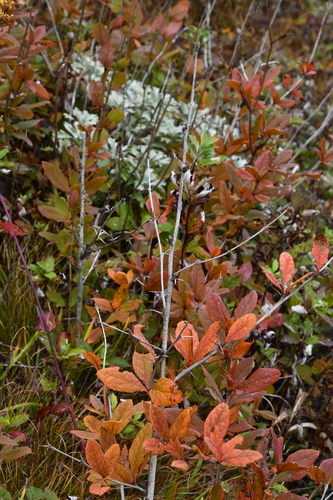
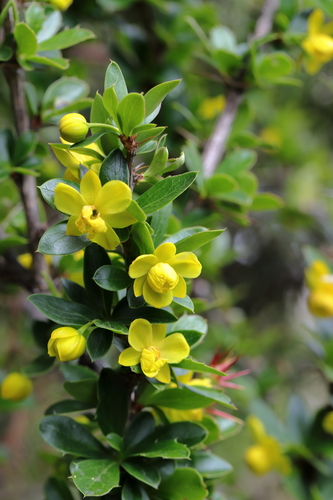
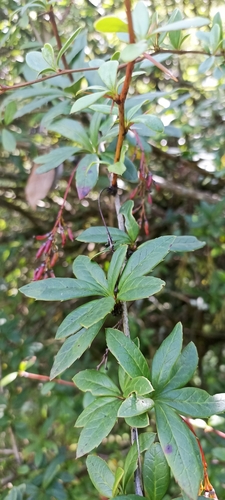
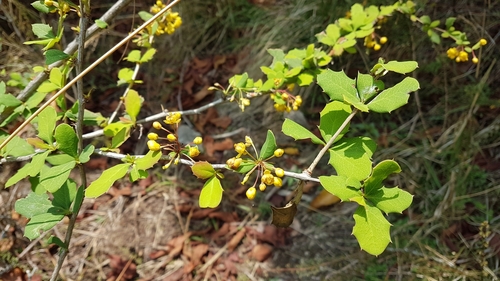
A shrub. It loses its leaves during the year. It grows 1 m tall. The shoots are dark red and angular. It has simple spines. The leaves are narrowly oval and 10-16 mm long by 3-4 mm wide. There are 4-8 flowers in a group. The fruit is a red berry. It is 6 mm long by 3 mm wide.
Wikipedia
Source ↗Berberis amoena is a shrub native to the Sichuan and Yunnan provinces of China. It is found at elevations of 1600–3100 m. The species was initially described in 1905 and given the name Berberis elegans. It was later discovered that this name had already been used twice before, so the plant was renamed Berberis amoena in 1911. Berberis amoena is a deciduous shrub up to 100 cm tall, with spines up to 12 mm long along the smaller branches. Leaves are elliptical, up to 16 mm long. Flowers are borne in groups of 4–8. Berries are red and oblong, growing up to 6 mm long.
Production
In Yunnan plants are harvested from May to September.
References (1)
- Ju, Y., et al, 2013, Eating from the wild: diversity of wild edible plants used by Tibetans in Shangri-la region, Yunnan, China, Journal of Ethnobiology and Ethno medicine 9:28