Herminium lanceum
(Thunb. ex Sw.) Vuijk

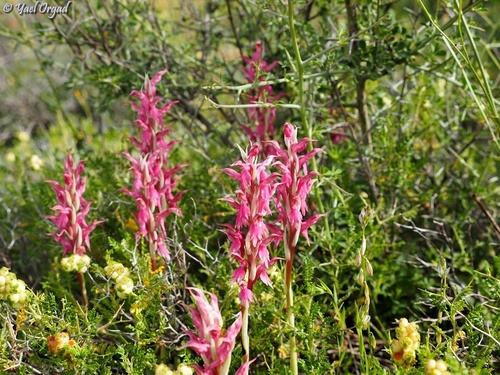
(c) Bahamut Chao, some rights reserved (CC BY-NC-ND)

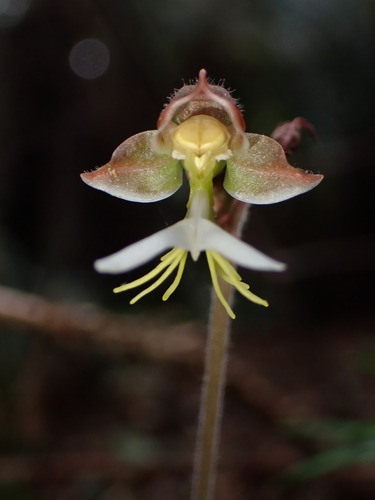
(c) daisychang, some rights reserved (CC BY-NC)
What to Eat
Edible parts: Plant, Root
The whole plant is stewed with meat and eaten as a tonic. The fleshy root is cooked with chicken or meat.
Where to Find It
It is a tropical plant. It grows in mixed forests, bamboo forests and grasslands between 700-3,600 m above sea level in southern China. It grows in Yunnan in China. In Sichuan.
Asia, China, East Timor, Himalayas, India, Indochina, Indonesia, Japan, Korea, Malaysia, Myanmar, Nepal, Philippines, SE Asia, Taiwan, Thailand, Tibet, Timor-Leste, Vietnam,
How to Identify
An orchid. It is 14-83 cm tall. The tubers are round or oval and 10-15 mm long by 5-12 mm wide. The stem has 2 tube shaped sheaths at the base. There are 2-4 leaves widely spaced on the stem. They are 6-20 cm long by 1 cm wide. The flowering stalk is 12-43 cm long. There are many flowers. They are pale yellowish green.
Medicinal Uses
The plant and root are prepared as a tonic.
Production
In Yunnan plants are harvested in August and September.
Names & Synonyms
Lianxiongde, Mukago-sou, Pan long shen
References (3)
- Ju, Y., et al, 2013, Eating from the wild: diversity of wild edible plants used by Tibetans in Shangri-la region, Yunnan, China, Journal of Ethnobiology and Ethno medicine 9:28
- Lim, T. K., 2015, Edible Medicinal and Non Medicinal Plants. Volume 9, Modified Stems, Roots, Bulbs. Springer p 79
- Silveira, P. et al., 2008, The orchids of Timor: checklist and conservation status. Botanical Journal of the Linnean Society, 2008, 157, 197–215. With 4 figures