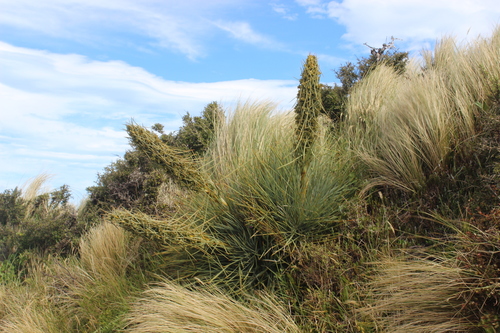
Ligusticum daucoides
(Franch.) Franch.
ApiaceaeLeaves

gbif · cc-by-nc-sa
MBG
MBG

gbif · cc0
Royal Botanic Garden Edinburgh
Royal Botanic Garden Edinburgh

gbif · cc0
Royal Botanic Garden Edinburgh
Royal Botanic Garden Edinburgh
What to Eat
Edible parts: Leaves
The leaves are used in stir fries and added to soups.
Where to Find It
It is a temperate plant. It grows in Sichuan and Yunnan in China. It grows in alpine scrub and meadows between 2,600-4,800 m above sea level.
Asia, China, Tibet,
Countries: United Arab Emirates, Afghanistan, Armenia, Azerbaijan, Bangladesh, Bahrain, Brunei, Bhutan, China, Georgia, Indonesia, Israel, India, Iraq, Iran, Jordan, Japan, Kyrgyzstan, Cambodia, North Korea, South Korea, Kuwait, Kazakhstan, Laos, Lebanon, Sri Lanka, Myanmar, Mongolia, Maldives, Malaysia, Nepal, Oman, Philippines, Pakistan, Qatar, Saudi Arabia, Singapore, Syria, Thailand, Tajikistan, Timor-Leste, Turkmenistan, Turkey, Taiwan, Uzbekistan, Vietnam, Yemen
How to Identify
A herb. It grows 20-50 cm tall. The root is stout and 4-10 cm long by 1.5 cm across. It has a single stem with 2 or 3 branches. It has the remains of the leaf sheaths at the base. The leaf stalks at the base are 8-18 cm long. The leaves are oval and 8-20 cm long by 4-5 cm wide. They are divided 3 or 4 times. The leaves on the stem do not have stalks and sheath the stem.
Names & Synonyms
Riqincai
References (1)
- Ju, Y., et al, 2013, Eating from the wild: diversity of wild edible plants used by Tibetans in Shangri-la region, Yunnan, China, Journal of Ethnobiology and Ethno medicine 9:28